
This was found by a coworker in the rules for the Northern District of Illinois. Headings unfortunately are not something most people check. They are obviously very important and SHOULD be checked every time.
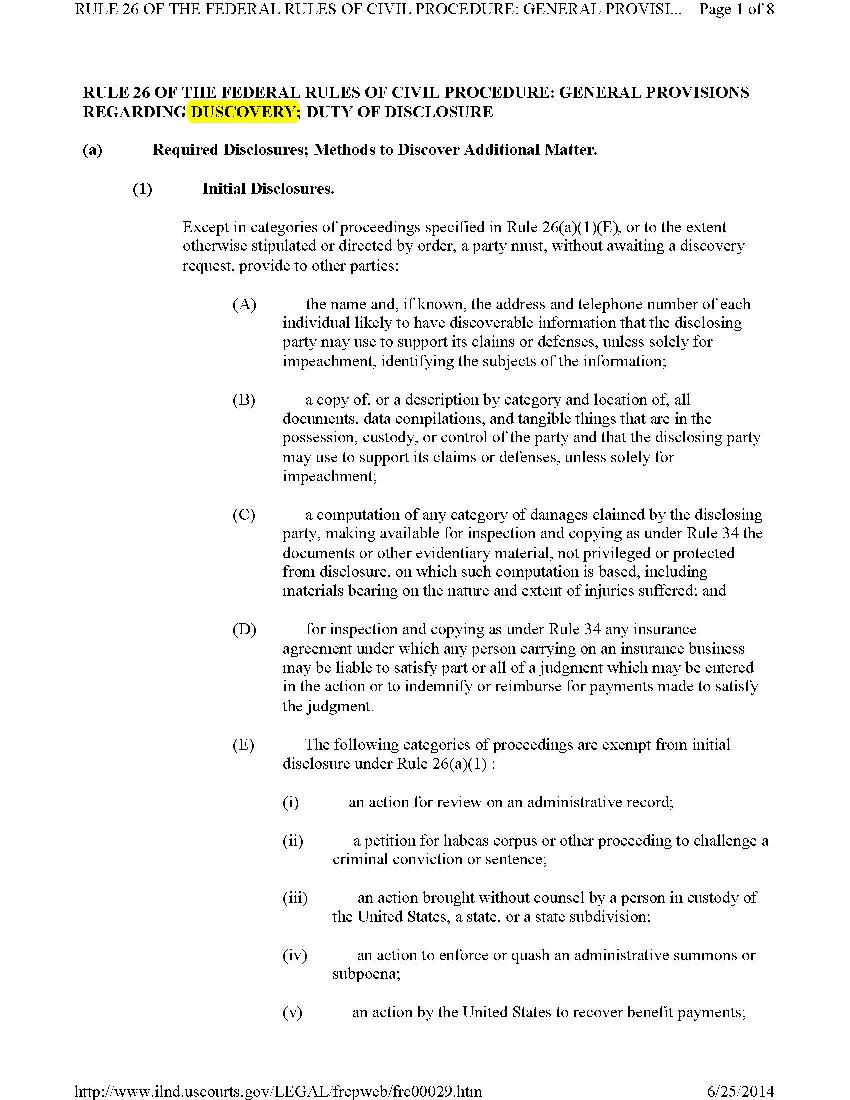

This was found by a coworker in the rules for the Northern District of Illinois. Headings unfortunately are not something most people check. They are obviously very important and SHOULD be checked every time.
 I learned something interesting this week. As much as you think you know about something, every once in a while it is good to check your resources. While I covered this topic according to the Gregg Reference Manual in a post entitled Things Are Coming to a Head(ing) about exceptions to the “capitalize everything except articles, conjunctions, and prepositions shorter than four letters” rule, a recent search through The Bluebook showed me that that rule was not correct for headings in a legal document done in “Bluebook style.” According to Section 8 of The Bluebook, in headings and titles, the first word in the heading or title and the word immediately following a colon in a heading or title should be capitalized. However, do not capitalize articles, conjunctions, and prepositions of four or fewer letters unless they fit the criteria in the immediately preceding sentence (they are the first word of the title or immediately follow a colon).
The Bluebook does, however, refer you to The Chicago Manual of Style or the Government Printing Office Style Manual if there are questions not answered in The Bluebook about specific capitalization issues. Here are the rules on capitalization according to The Bluebook:
I guess I’ll have to read through The Bluebook again just for good measure to see what other “rules” need to be adjusted.
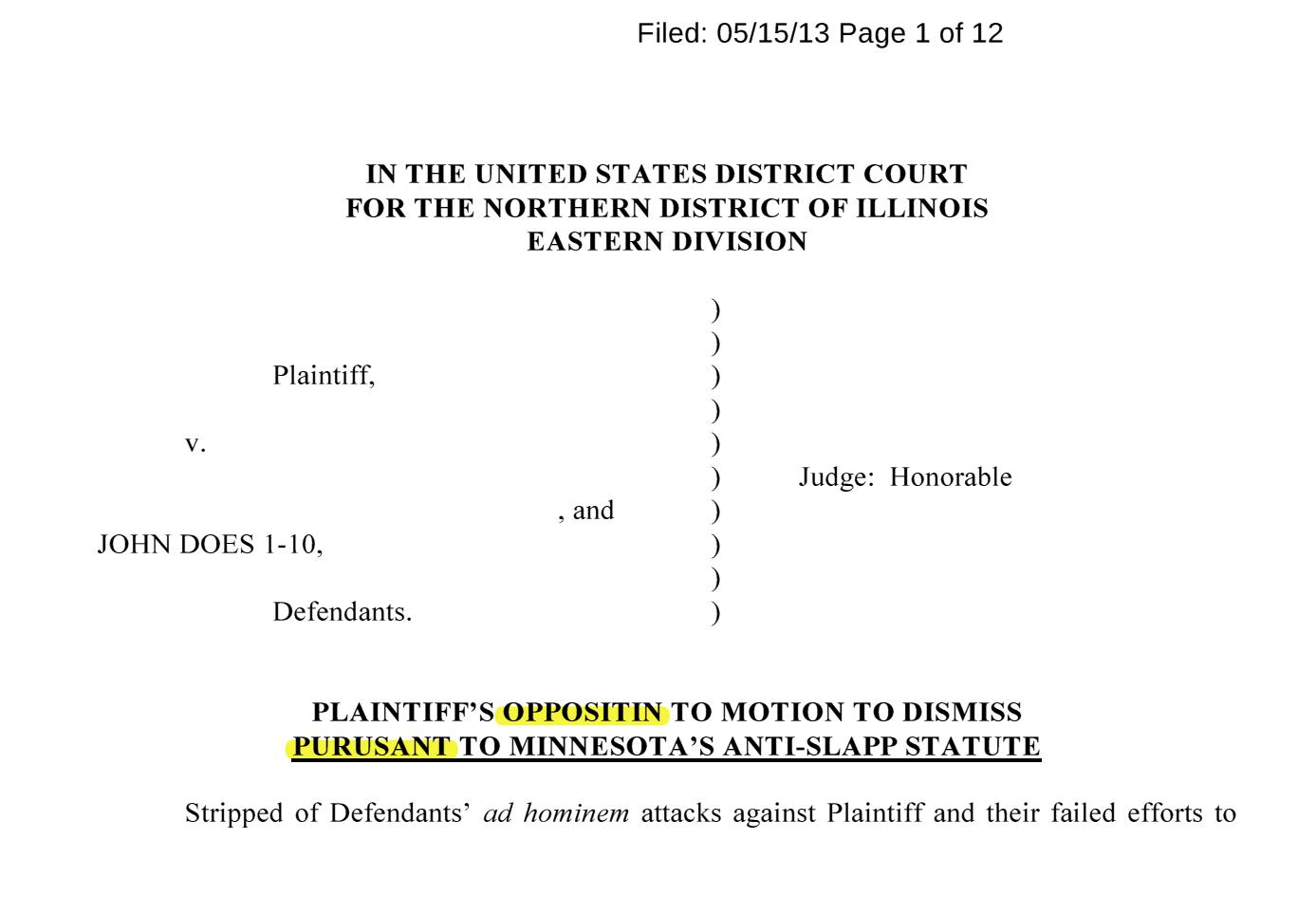
I found this on Twitter and have removed the details to protect the . . . ridiculously stupid. This proves my point that proofreading headings and captions is just as important as proofreading the guts of a document. Apparently, there were many grammar errors throughout this document, but I couldn’t get past the first heading. And just think about what the judge who gets this document thinks. Actually, I believe they think this document is not worth wasting time reading.
I learned more about headings last week than I thought I already knew about headings. Now I get the pleasure of passing all of that new knowledge on to you!
There are two types of headings—a run-in headingand a freestanding heading. A run-in heading is one where the substance of the paragraph starts immediately after the heading. Run-in headings are usually set off by bold font and/or underlining. A freestanding heading is one which is on a line by itself, sometimes as part of an outline in a document.
A run-in heading will always be followed by a form of punctuation depending on the type of heading. If the heading is a question, it will end in a question mark. However, in a freestanding heading, use no punctuation unless you need to use a question mark or an exclamation point because the heading demands it.
As for capitalization, you are supposed to capitalize all words in the heading over four letters and capitalize all words in the heading under four letters EXCEPT:
a
an
and
as
at
but
by
for
if
in
of
off
on
or
out
nor
the
to
up
Of course, as in all things grammar, there are exceptions to that rule. If a word on the “don’t capitalize” list begins or ends the sentence, it should be capitalized. If a word on that list comes after a dash or a colon, it should be capitalized. Capitalize short prepositions like up, in, on, and for when they are used with prepositions having four or more letters.
Rafting Up and Down the Colorado River
Driving In and Around the City
New Store Opening On or About March 1
I have printed this list of words that should not be capitalized except in the special circumstances and taped it to my work computer so that it is easier for me to remember. I honestly think titles look better with each word capitalized, but who am I to argue with Gregg? If that’s the rule and my attorneys don’t have a problem with formatting headings “by the book,” then I will adjust. Will you?
 Follow