
I caught this one on a trip back from Albuquerque recently. Even my grandchildren knew this was wrong (since they had to figure out why I had my phone out taking a picture in the middle of a store).
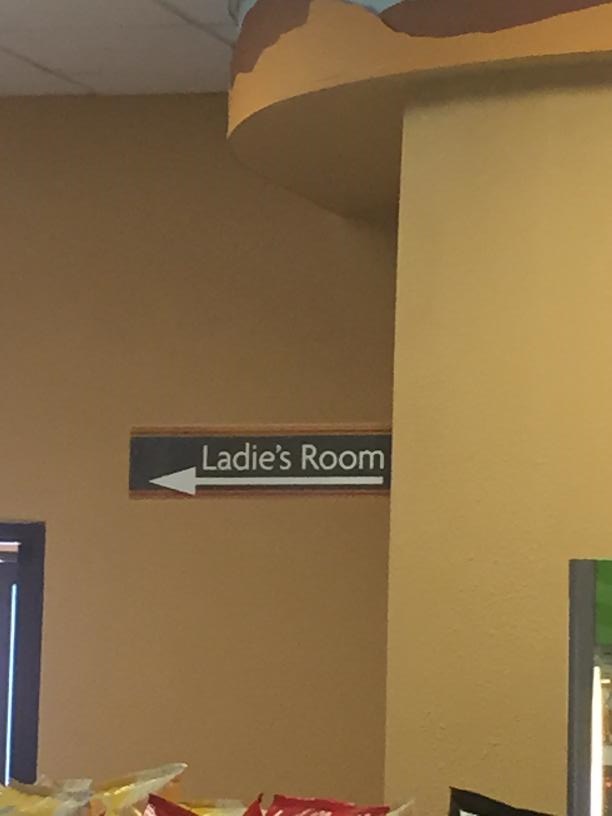

I caught this one on a trip back from Albuquerque recently. Even my grandchildren knew this was wrong (since they had to figure out why I had my phone out taking a picture in the middle of a store).
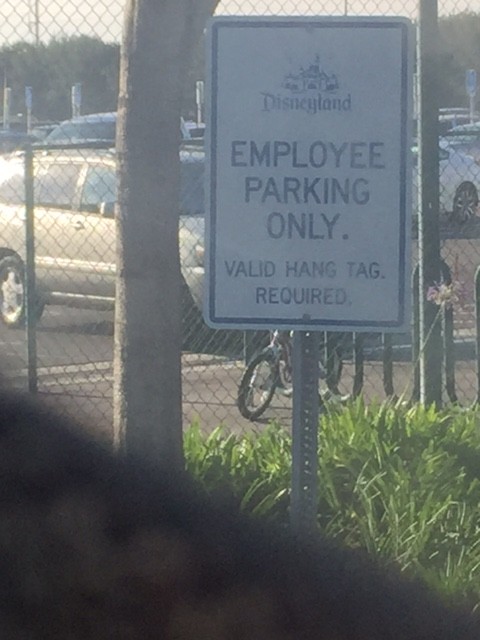
I spent a lot of time at Disneyland in the last month. I have a lot of respect for Disney and the way they operate the Parks. While I looked for signs with errors, I didn’t find anything in either Disneyland Park or California Adventure, so my dream job (wandering around Disneyland looking for grammar errors) was out the window. But in my second trip, while on a shuttle bus from a parking area to the Parks, my son caught this one. With apologies for the less-than-clear picture (it was taken through a dirty bus window), you should get the idea. In Disney’s defense, I was not near the sign, so was not able to confirm that the extra period was an error and not squashed bugs, so I’m going with an error–and an opportunity for my dream job!
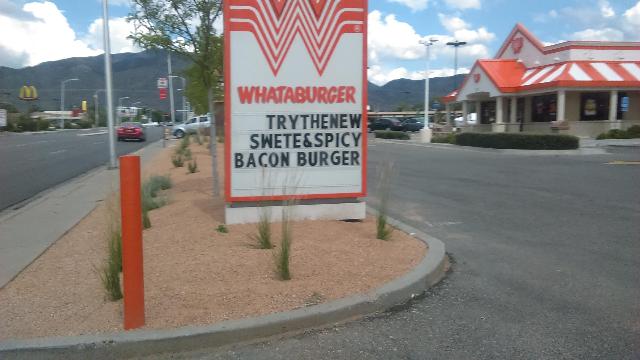
This picture came from a recent trip to Albuquerque. While the sandwich sounds like it would be pretty good, I’m a little worried about whether they are trying to spell “sweat” or “sweet.”
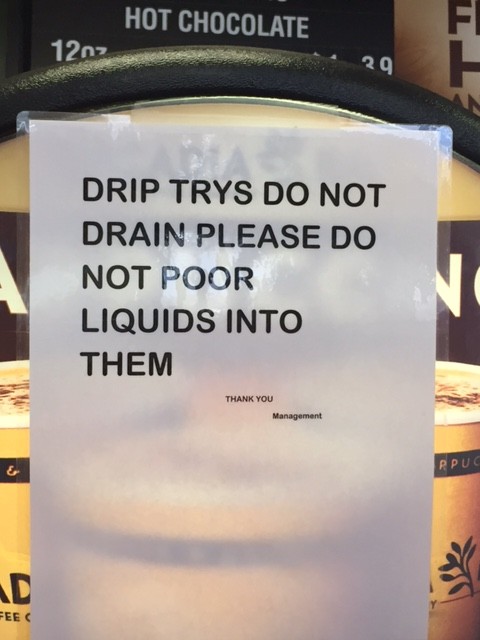
At a stop in Quartzsite, Arizona, on our way to Disneyland, I saw this sign on a drink fountain. There were several of the signs throughout the store on all of the drink dispensing fountains, so at least they were consistent. They were just consistently horribly wrong.
This headline was in a local business paper and should have been easily caught if someone had actually looked at what they were typing.
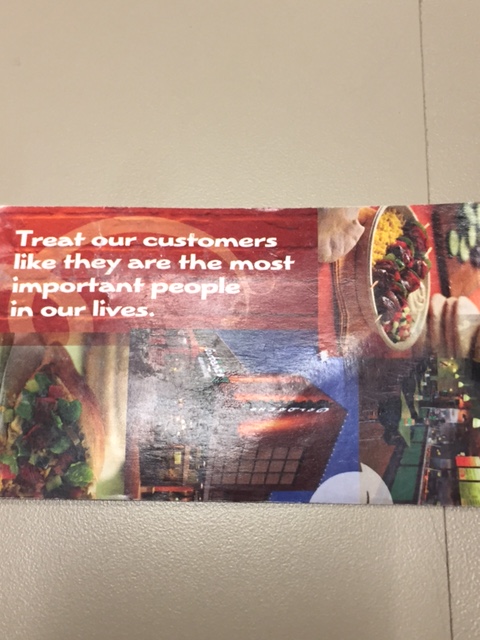
I saw this business card today and knew it was a Grammar Giggle. While it is a nice thought, it is an incomplete sentence. Do they want YOU to treat their customers that way or do THEY treat their customers that way. I’m all for saving space, but not to the detriment of your message.
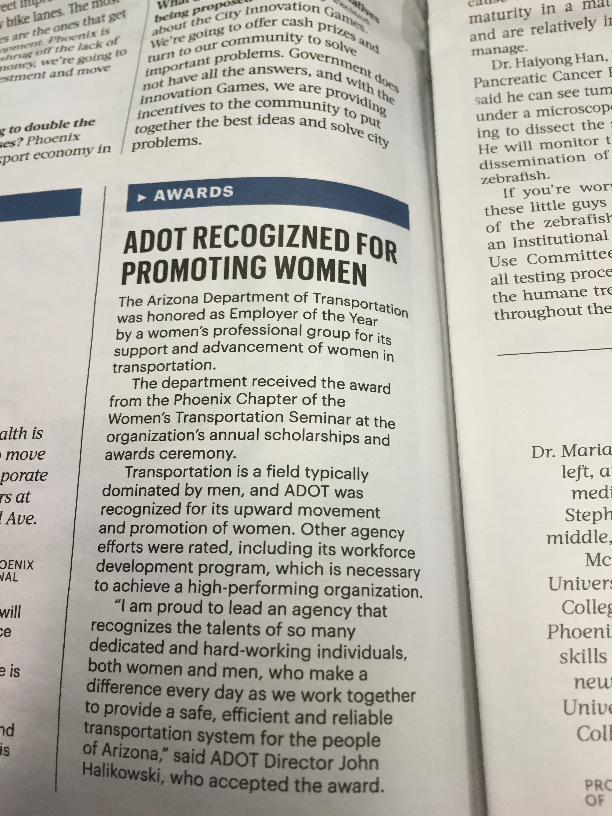
So many people sent this one to me that I feel compelled to write about it. This headline 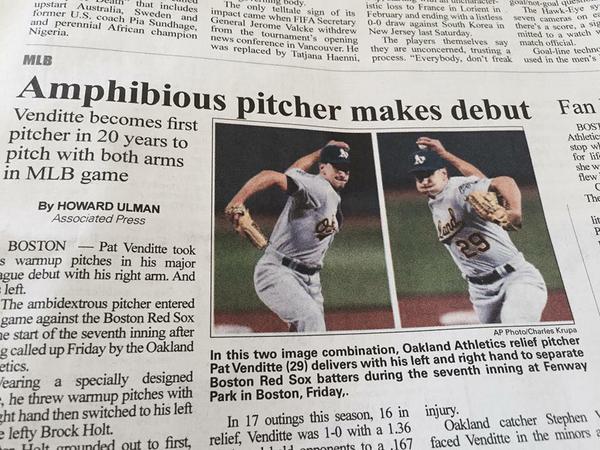 appeared in the East Oregonian this past weekend. It appears that although it was an Associated Press article, newspapers and other media outlets who reprint AP articles can change the headline to save space, etc. under their contract. So this tells us that the person in charge of laying out the sports pages of Saturday’s East Oregonian doesn’t know the difference between “ambidextrous”–the ability to use either hand as well as the other–and “amphibious”–the ability to work on land or in water. I’m sure lots of people don’t know that difference. The worst part is that the word “ambidextrous” appears in the actual article two words in on the second paragraph–close enough to the top that even I (a non-sports fan) might read that far.
If you have even the slightest question about whether a word is correct, check it out. With online dictionaries a click away, it is inexcusable. This story has spread like wildfire (a search of “amphibious pitcher” brings 158,000 results three days after the initial publication), so the East Oregonian unnamed confused employee has created quite a sensation. And I’m thinking not a very good sensation. Think about your first impression of the East Oregonian newspaper when you started reading this.
I know I would not enjoy being the one responsible for such a “silly mistake.” At least that’s what the East Oregonian editor has to say about it. Silly? Yes. Inexcusable? Maybe. I know we all make mistakes–heaven knows I’ve made more than my fair share (and have stories to prove it!)–but for me, personally, I hold schools and media to a higher standard. LANGUAGE IS YOUR JOB! Of course, it is our job too. Slow down and take the time to get it right.
If you have trouble with vocabulary, start reading! Most newspapers and books go through an editing process designed to make things as error free as possible. The more you read, the more your vocabulary improves. An even better practice is to look up words you don’t understand as you read them. Or sign up for a word of the day on most online dictionary sites and lot of other sites. Just do a Google search for “word of the day” and you will have lots of choices. That is a small thing that could make a big difference. Doing these things on a consistent basis can help you avoid the kind of “silly mistake” that can go viral and put your firm’s name out in the world in a way they hadn’t intended in a manner that is not at all flattering. Take the time your project deserves, concentrate on one project at a time (as much as that is possible), and produce work that is as error free as possible. “Silly mistakes” are for others who don’t work hard to make themselves and their firms look good.
A reader sent this to me. So many things could be said, but suffice it to say that spacing is indeed important. It reminds me of my favorite typing issue. Every time I try to speedily type “does not,” it comes out “doe snot.” Spelled correctly but obviously not what I want to say. Every. Single. Time. So slow down and get it right!
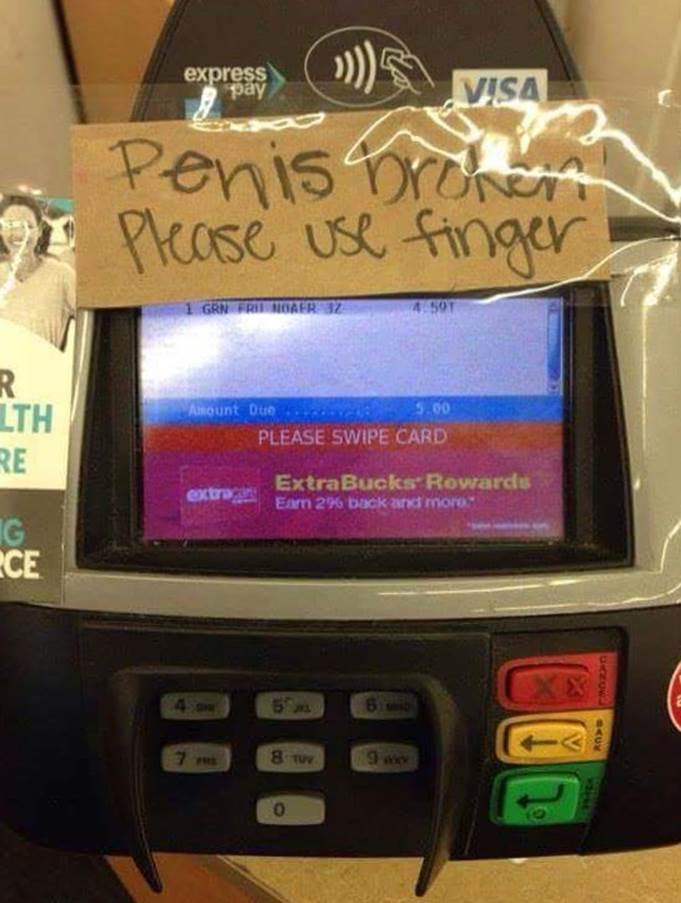
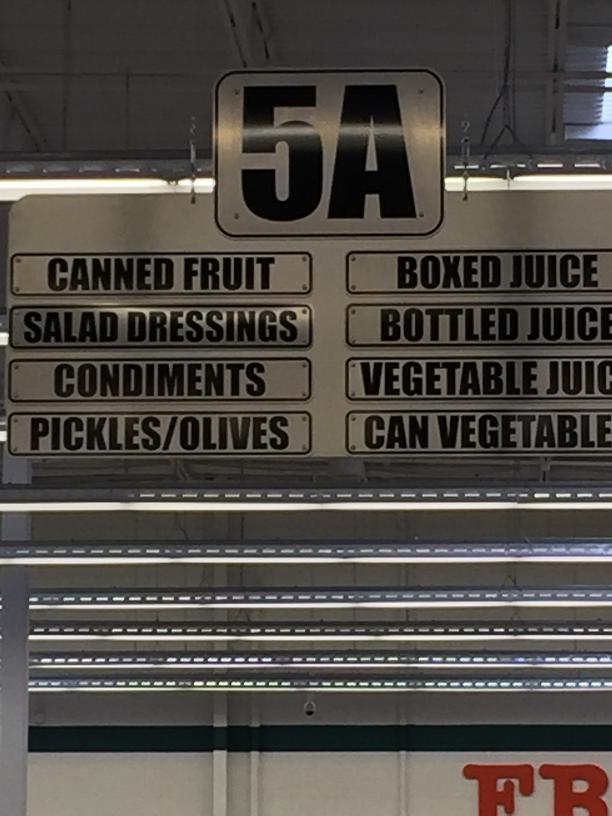
I embarrassed my husband by standing in the middle of the grocery store aisle to take this picture. Again, consistency is key. If you’re going to call them “canned” fruits (which is correct), then you should call them “canned” vegetables.
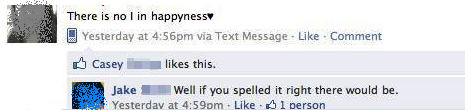
It seems that Facebook could be a virtual treasure trove of material for this blog. Unfortunately, I think I would lose all hope in people generally if I trolled Facebook for errors. Not only that, I don’t want people unfriending me or not friending me at all because they are too worried about showing up here. Just so you know, I don’t do that . . . unless it’s really good. 🙂 People are judging you every day and for some people, a Facebook post or tweet may be the only impression they have of you. Take an extra minute to make sure what you’re posting is in line with how you want to appear to anyone who may see your post.
 Follow