
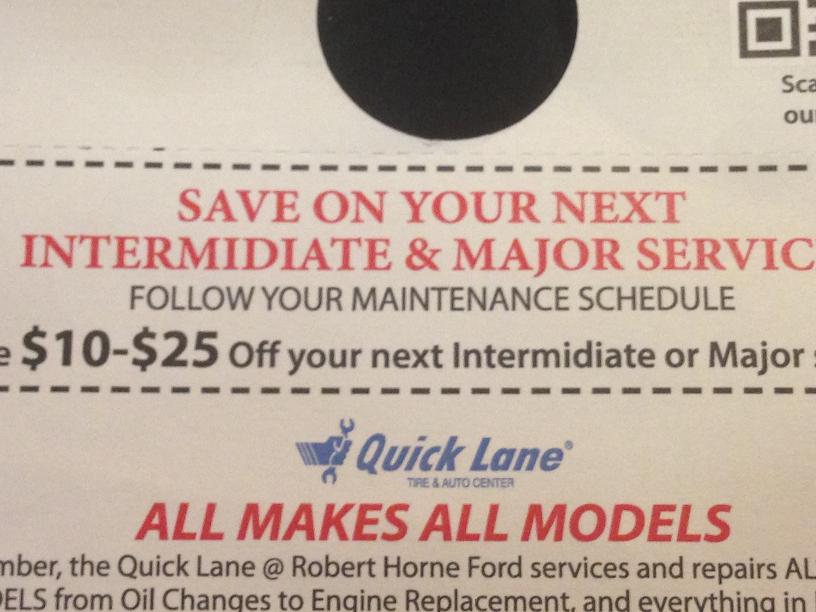
I received this when I last took my car in for service. At least they were consistent.

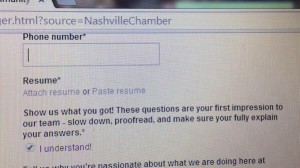
This one comes from Twitter. It seems to me that if you’re going to have a job application that asks people to proofread their answers, the least you could do is proofread the instructions.
 In a continuation of last week’s article Should We Use Italics or Underline?, we will talk about titles of literary or artistic works.
This reminds me of underlining or italics with case citations. When using et seq. or et al., since the period is part of the word, it is italicized or underlined. Any punctuation following that period (as in the second example) is not italicized or underlined.
That’s a lot about italics and underlining. Is there something you have a question about? Add a comment and we can learn together in another post on Proof That proofreading blog.
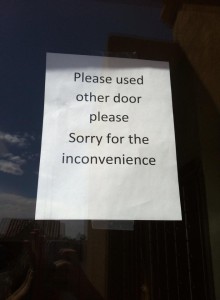
Another sign furnished by my granddaughter from the mail room at her apartment complex. Not only do they ask you super politely to not use this door by saying please twice, but they ask you to used the other door all while they are able to spell inconvenience correctly.
I found this on my cousin’s Facebook page. Apparently stores need spell checker for their sign making equipment

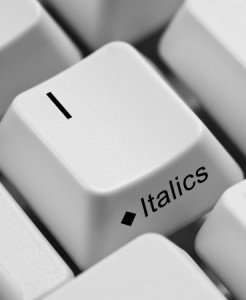 In legal documents, it seems that italic type is used more frequently than underlining—likely because The Bluebook: A Uniform System of Citations has changed the treatment of cases cited from underlining to italics as long as it meets court rule requirements. Well, that, and the fact that computers made the use of italics much easier. I think italics looks better than underlining, but that is personal preference. Here are some rules for italics and underlining.
We will continue this discussion next week with literary titles and artistic works and some basic guidelines.
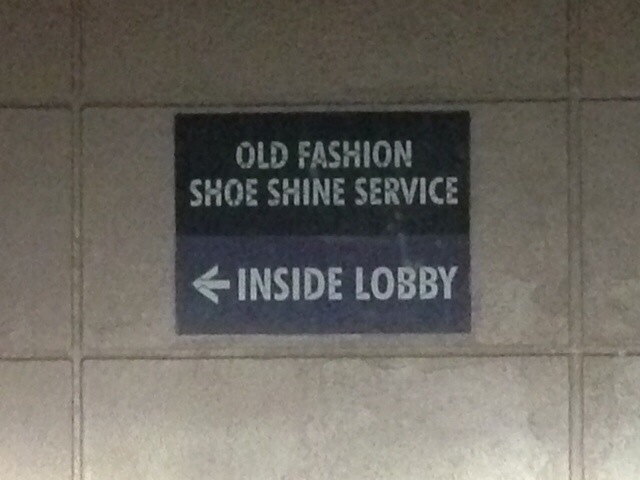
I saw this sign at a local car wash and it reminded me of Guest Blogger Kerie Trindle Byrne’s article “Is Good Grammar Old-Fashion or Old-Fashioned?” The sign is advertising what seems to be a valid service except I’m pretty sure they are advertising a gentleman with a stool and a polishing cloth, which is an “old-fashioned” shoe shine.
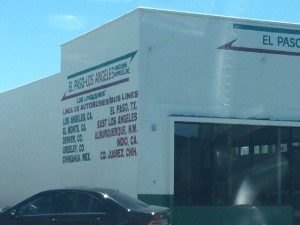
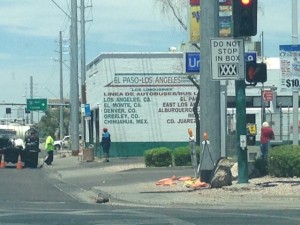
Driving down a main Phoenix street the other day and this caught my eye. Probably because a family member lives in Albuquerque so I actually use it more than usual and have to say it in my head by syllable to get it right, but obviously the sign painter for this local bus company didn’t pronounce the syllables correctly.

Copyright: vladru / 123RF Stock Photo
Since it’s the season of graduations, I thought it appropriate to talk about how to use academic degrees and professional designations.
Typically, abbreviations of academic degrees are written with periods after each element of the degree:
The term “MBA” is commonly written without periods when talking about an executive with certain training rather than the degree itself. The degree is still “M.B.A.” with the periods.
When using the degree as part of the name, do not use personal titles before the name and only use the degree when using a person’s full name:
However, other titles may precede the name when they do not convey the same meaning as the degree that follows the name:
When two or more academic degrees follow a name, they should be listed in the order they were awarded and honorary degrees should follow earned degrees.
Professional designations are generally written without periods when used alone, but with periods when used with academic degrees:
List professional designations only where one’s professional qualifications are relevant to the topic under discussion. I take this to mean that when you have worked hard to earn professional certifications, they should be used whenever you are representing your profession.
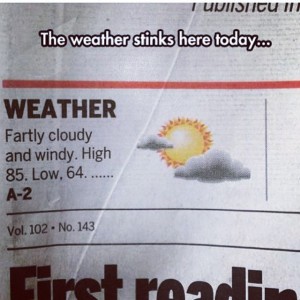
This is particularly appropriate as we have a heat advisory here in Phoenix for tomorrow and they expect it to be near record heat at 111. THAT is stinky weather!
 Follow