
I took these pictures at a restaurant recently. While the food was delicious, the menu needs some work. The worst part was the words that are misspelled are spelled correctly elsewhere on the same menu.
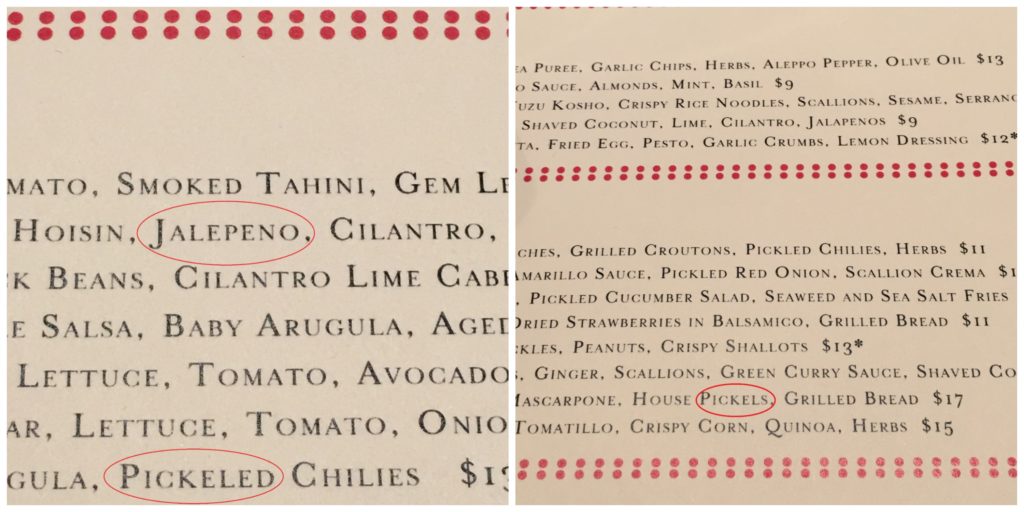

I took these pictures at a restaurant recently. While the food was delicious, the menu needs some work. The worst part was the words that are misspelled are spelled correctly elsewhere on the same menu.
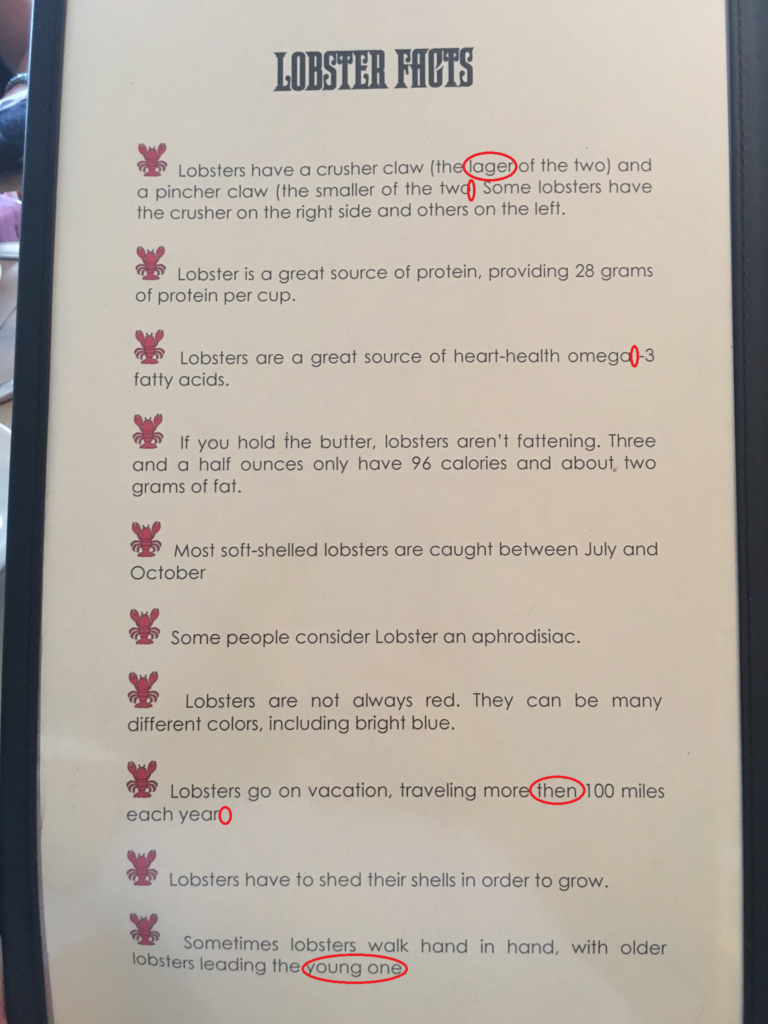
A friend sent me this picture from her recent Florida vacation. I’ll explain the many errors.
 A reader wrote and asked me whether the phrase “attorney-client privilege” or “attorney-client privileged” was correct. I gave her my answer and told her that I would write a blog post on it.
“Attorney-client privilege” is defined as “the requirement that an attorney may not reveal communications, conversations and letters between himself/herself and his/her client, under the theory that a person should be able to speak freely and honestly with his/her attorney without fear of future revelation.” (http://dictionary.law.com/default.aspx?selected=2467)
“Attorney-client privileged” would be used if you were talking about an “attorney-client privileged communication” or “attorney-client privileged information.”
I did find a law firm article (http://www.faegrebd.com/the-holey-grail-a-guide-to-attorney-client-privilege) indicating memos containing privileged information should be marked “ATTORNEY-CLIENT PRIVILEGED AND CONFIDENTIAL.” This makes sense because you are talking about the information in the memo, which is attorney-client privileged information (as mentioned above) and is confidential information.
So, if you are indicating on a memo or on a letter that the information is confidential and subject to the attorney-client privilege, the correct designation appears to be “ATTORNEY-CLIENT PRIVILEGED INFORMATION.” It follows that you could say that the word “information” is assumed and “ATTORNEY-CLIENT PRIVILEGED” is a correct designation.
When you are talking about the privilege and not the information, then “attorney-client privilege” is proper, but if you are talking about information or a specific communication, then “attorney-client privileged” is correct.
This research proved that my original answer to the reader was . . . wrong! But now I know and will be able to figure out if we are talking about the privilege or the communication so that I get it right.
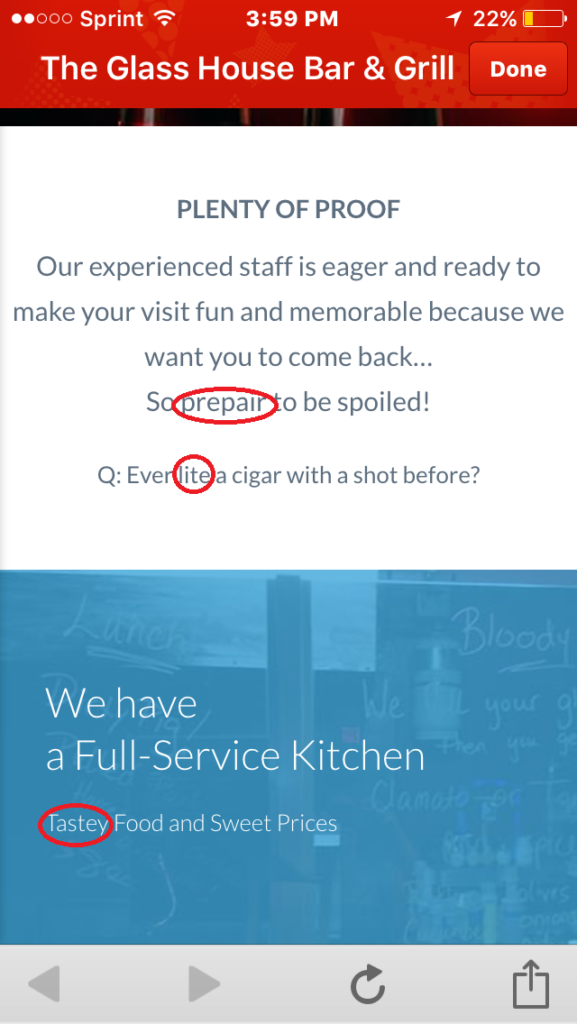
A friend forwarded this one to me. I don’t even know where to start, so I have circled the errors that I found in a quick review. Note that the word “lite” is in more common usage when you’re talking about a lower calorie or lower fat version of a food, but NOT when talking about fire used to light something. That is “light.”
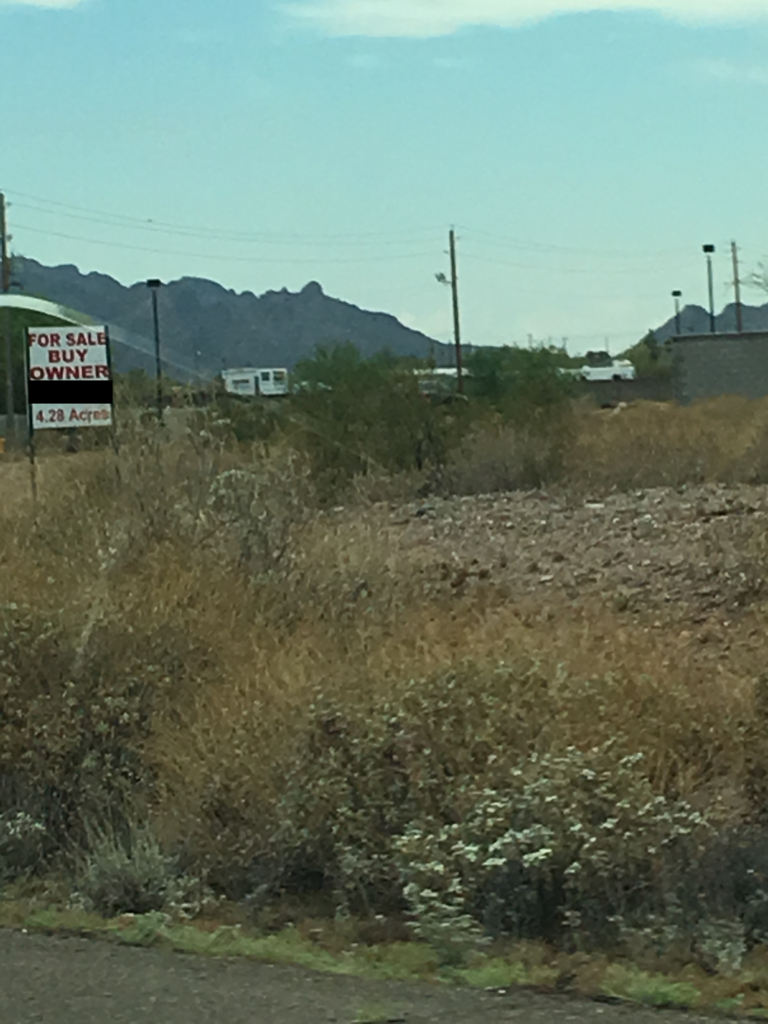
I saw this sign the other day and had to go back and make sure it said what I thought it said and to get a picture of it. For Sale Buy Owner? I don’t want to buy the owner, but surely someone is interested in the 4+ acres of property that would seem to be for sale if the sign were correct. Is the property for sale or the owner? It is definitely confusing.
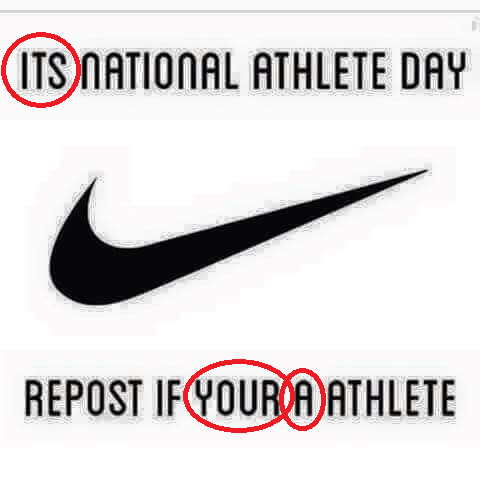 I typically scroll right past most Facebook memes because they are full of grammar errors (and we all know that makes me crazy)! But this one was one of the worst I’ve seen, so I had to share.
I’ve circled the errors, just in case you weren’t quite sure. I’m fairly certain this is NOT related to Nike, even though it includes their patented trademark swoosh. So here is the explanation of the errors:
“Its” should be “It’s” because it is the contraction of “It Is” National Athlete Day.
“Your” should be “You’re” as the contraction of “You Are”
“A” should be “An” because it is before the word “athlete” which starts with a vowel sound.
So . . . the entire message SHOULD be “It’s National Athlete Day. Repost If You’re An Athlete.”
There now I feel better.
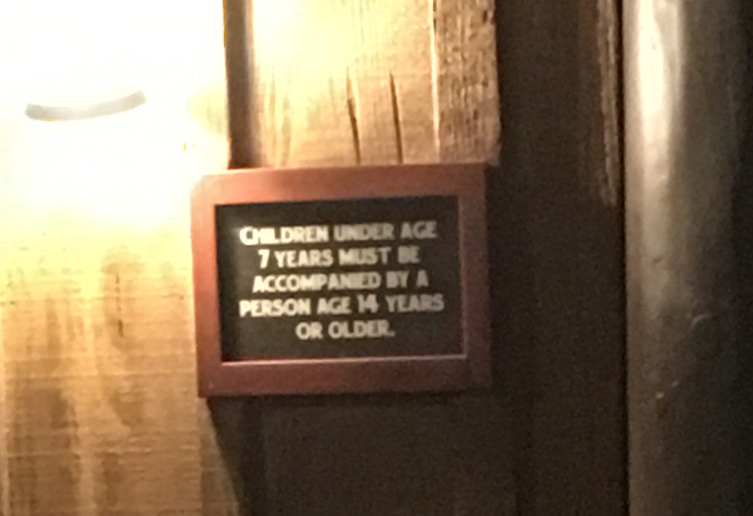 I saw this sign more than once at Disneyland (consistency is good!). I thought something was wrong with it, so snapped this picture vowing to do some research and figure out if I was correct. The problem is whether it should be “age” or “aged.”
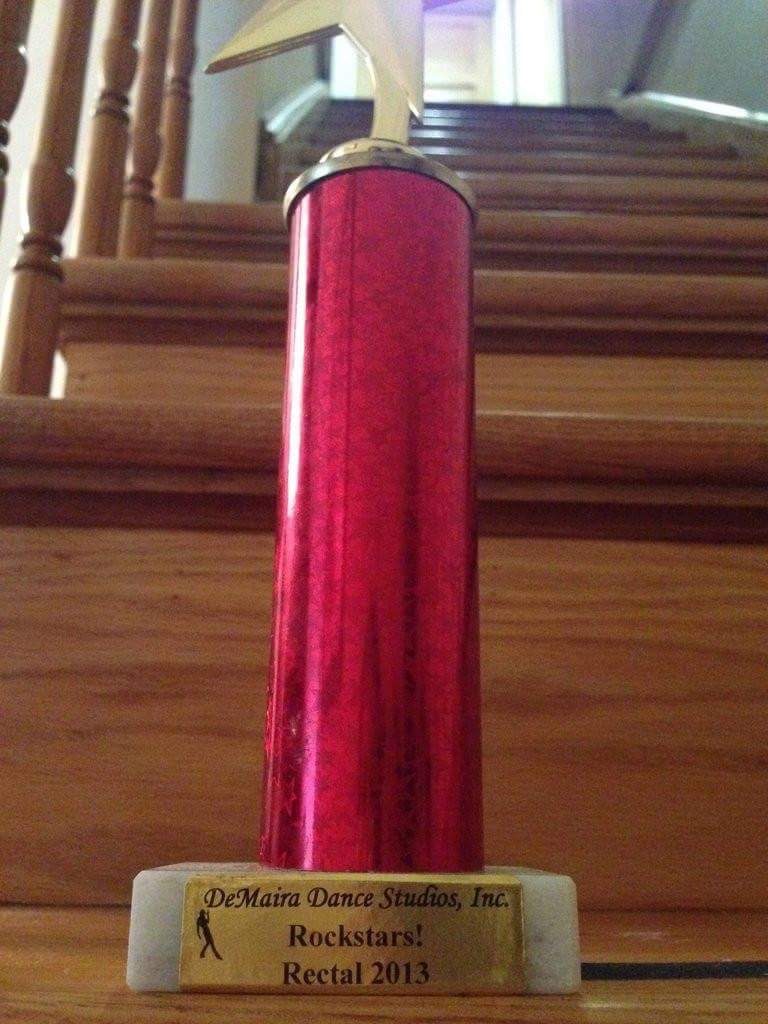
A friend send this one to me and I had to use it. While it is funny to me, I’m sure it was not so funny to the recipient.
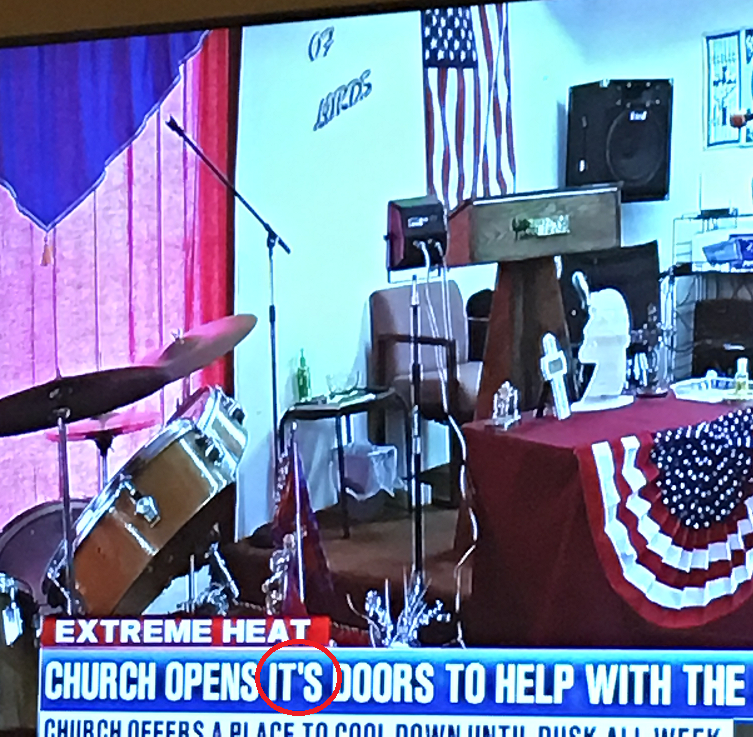
Once again, I had to pause the local news, watch my husband roll his eyes, and snap a picture of this jewel. This is a common mistake because it kind of defies the rules. The possessive of “it” is “its.” The contraction of “it is” is “it’s.” I get that it is confusing, but it’s a concept that can be (and should be) learned. If you are tempted to use the apostrophe, check to make sure it is correct by substituting “it is” for “it’s.” If it doesn’t make sense (and it won’t if it’s supposed to be a possessive), then don’t use the apostrophe. An example is the sentence in this post “. . . but it’s a concept that can be . . ..” You can replace the “it’s” with “it is” in that sentence so it is correct–“. . . but it is a concept that can be . . ..”
 A friend and I were recently discussing what our possibilities for recreation are for a trip to Sedona, Arizona, this summer. When I said “vortexes,” her response was “shouldn’t it be vortices?” I had never heard that word, but told her I would investigate and use it as a blog topic. So here we are.
According to the Gregg Reference Manual nouns of a foreign origin retain their foreign plurals while some now have English plurals and others have two plurals—both foreign and English. How confusing is that? When there are two plural forms, one form may be preferred to the other and you are instructed to check your dictionary to be sure of the correct plural form.
I will not quote the entire section from Gregg, but it is interesting indeed. It is in the Tribute (11th) edition starting on page 204. Here are select entries:
| WORDS ENDING IN US (the asterisk indicates the preferred form) | ||
| Singular | English Plural | Foreign Plural |
| cactus | cactuses | cacti* |
| focus | focuses* | foci |
| nucleus | nucleuses | nuclei* |
| stylus | styluses | styli* |
| thesaurus | thesauruses | thesauri* |
| WORDS ENDING IN A | ||
| Singular | English Plural | Foreign Plural |
| agenda | agendas | |
| dogma | dogmas* | dogmata |
| formula | formulas* | formulae |
| vertebra | vertebras | vertebrae* |
| WORDS ENDING IN UM | ||
| Singular | English Plural | Foreign Plural |
| addendum | addenda | |
| auditorium | auditoriums* | auditoria |
| consortium | consortiums* | consortia |
| curriculum vitae | curricula vitae | |
| erratum | errata | |
| maximum | maximums* | maxima |
| memorandum | memorandums* | memoranda |
| stadium | stadiums* | stadia |
| ultimatum | ultimatums* | ultimate |
| WORDS ENDING IN O | ||
| Singular | English Plural | Foreign Plural |
| crescendo | crescendos* | crescendo |
| tempo | tempos | tempi (in music) |
| WORDS ENDING IN ON | ||
| Singular | English Plural | Foreign Plural |
| criterion | criterions | criteria* |
| phenomenon | phenomenons | phenomena* |
| WORDS ENDING IN X | ||
| Singular | English Plural | Foreign Plural |
| appendix | appendixes* | appendices |
| crux | cruxes* | cruces |
| index | indexes (of books) | indices (math symbols) |
| matrix | matrixes | matrices* |
| vortex | vortexes | vortices* |
| WORDS ENDING IN IS | ||
| Singular | English Plural | Foreign Plural |
| analysis | analyses | |
| crisis | crises | |
| ellipsis | ellipses | |
| parenthesis | parentheses | |
| synopsis | synopses | |
| WORDS ENDING IN EU OR EAU | ||
| Singular | English Plural | Foreign Plural |
| Adieu | adieus* | adieux |
| Bureau | bureaus* | bureaux |
| Plateau | plateaus* | plateaux |
| COMPOUND WORDS | ||
| Singular | English Plural | Foreign Plural |
| chaise longue | chaise longues* | chaises longues |
| hors d’oeuvre | hors d’ouevres* | hors d’oeuvre |
| maître d’ | maître d’s | |
So did you learn anything from this taste of English and foreign pluralization of foreign nouns? I sure did! I was wrong and will forevermore refer to Sedona’s vortices correctly. Who knew?
 Follow