My news station seems to have had trouble last week and used an apostrophe to make a proper noun plural rather than to show ownership (which would require an apostrophe). #azfamily #proofread #grammargiggle #proofthat
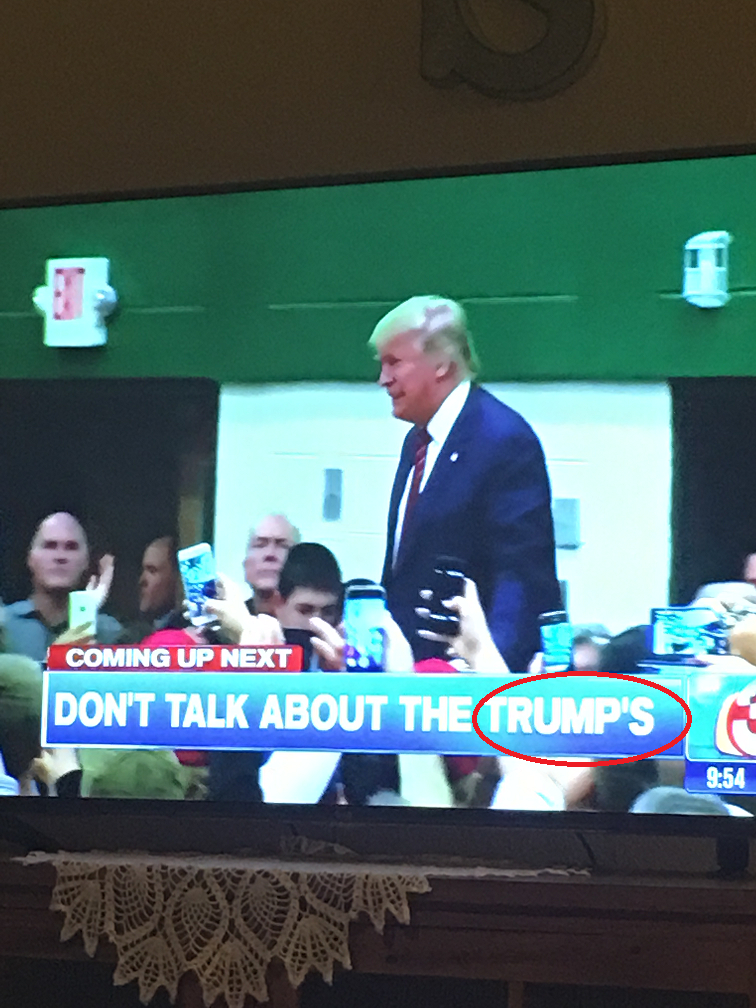

My news station seems to have had trouble last week and used an apostrophe to make a proper noun plural rather than to show ownership (which would require an apostrophe). #azfamily #proofread #grammargiggle #proofthat
My news station is keeping me in lots of material this week. Here is the headline for a story about the Roomba Vacuum. And that’s as in ONE “c,” not two. #azfamily #proofread #grammargiggle #proofthat
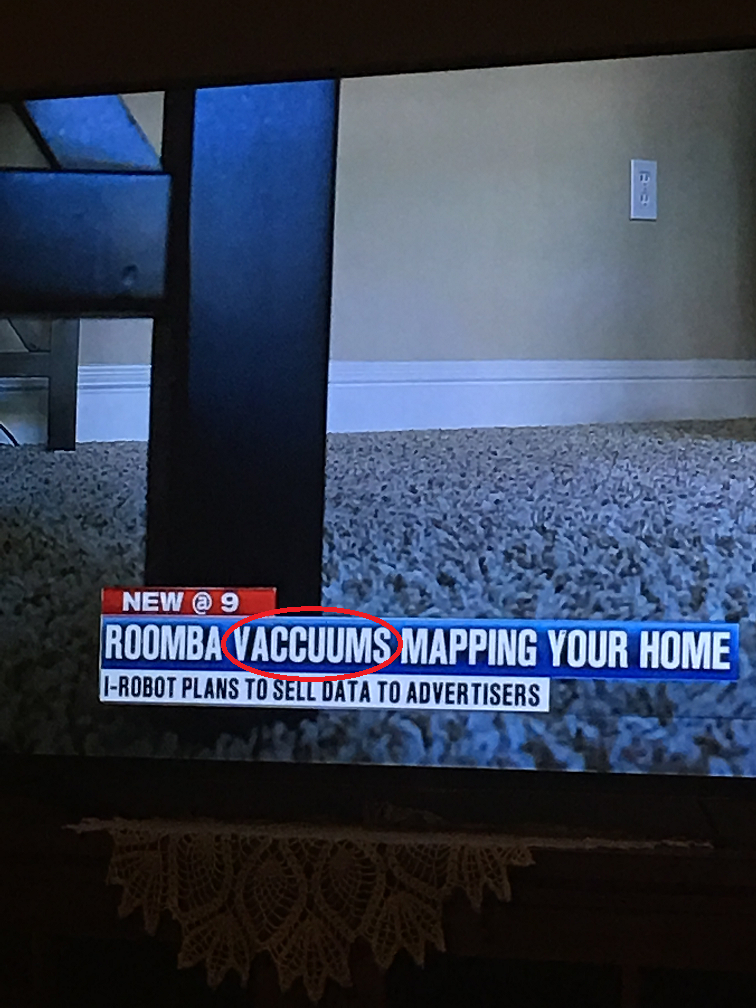
 Proofreading your own work is one of the hardest jobs you have. You know what it is supposed to say, so that’s what your brain reads. If you are trying to proofread your own work, here are some tips:
Most of all, keep learning. One good way is to read everything—newspapers, books, magazines. While there are lots of errors in those publications, there are also lots of good grammar usage. Another way is find websites and blogs that teach grammar and proofreading. Here are some of my recommendations—Proofreading Resources.
You should definitely proofread your work before you pass it on to the next person. Their job may well be to edit your work, but that doesn’t mean that their job is to clean it all up. You will impress them as a writer if they don’t have to correct obvious mistakes in your work. Take the time to prove that you are a good writer and know what you’re doing.
If you have tips for proofreading your own work, please share them in the comments below.
 It’s time for our new feature called “Confusing Words of the Week” where I take a set of two or three words that get confused and give you definitions and try to give you a memory trick to help you remember when to use which word. If you have words that confuse you, use Ask PTB or send an email to proofthatblog@gmail.com and they may appear here soon!
This week’s words:
peak – the top. The peak of the mountain was covered with clouds.
peek – to look slyly at. He tried to peek at the cute girl in the corner. Just think about the double “e” as eyes. You’re looking at something with those eyes.
pique – resentment; to offend; to arouse. Jane piqued Sally’s interest in the movie coming out this week by telling her the back story.
piqué – cotton fabric.
I saw this one in a Facebook ad. “Steak” is food and “stake” is a rod in the ground to support something.

I’m going to start a new feature called “Confusing Words of the Week” where I take a set of two or three words that get confused and give you definitions and try to give you a memory trick to help you remember when to use which word. If you have words that confuse you, let me know and they may appear here soon!
This week’s confusing words are accept and except:
accept is to take or receive. He was ready to accept his new job duties. (He was ready to receive his new job duties.)
except is to exclude. He was ready for the new job duties except typing daily reports. (He was ready for all of his job duties excluding typing daily reports.)
The easiest way to remember which one to use is the EXcept is to EXclude. So if you want to EXclude something, you would say EXcept as in the following example:
I like all flavors of Life Savers EXCEPT lime.
That means if you take all of the flavors of Life Savers and exclude the lime ones, those are what I like.
If you are not going to EXclude something, you will accept it.
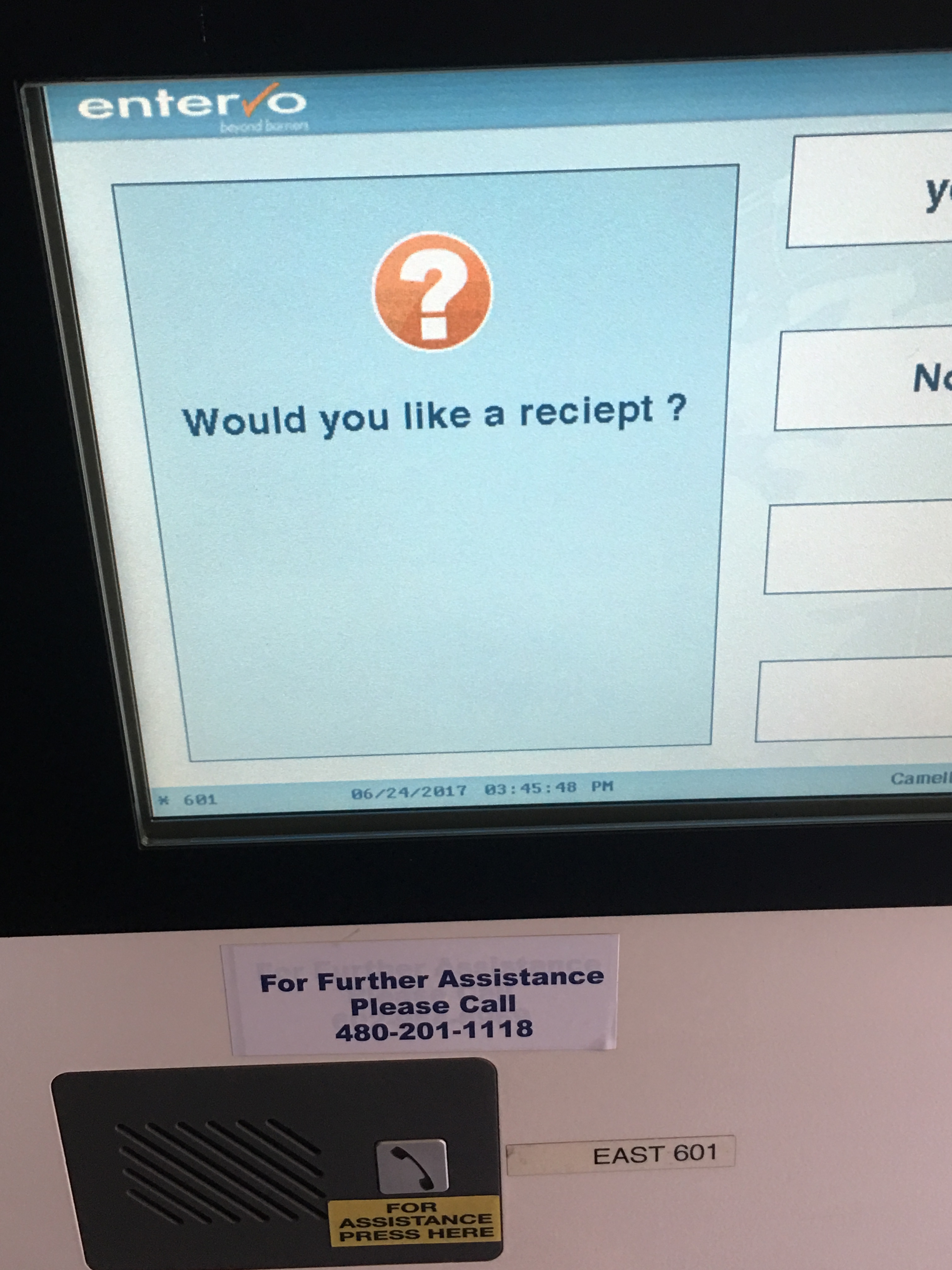
As I was paying to get out of a parking garage last weekend, I noticed this common misspelling. This word really DOES follow the “i before e except after c” rule.
The words lie or lay seem to cause problems for people. How do you know when to use which one? Let’s see if we can clear it up a little bit.
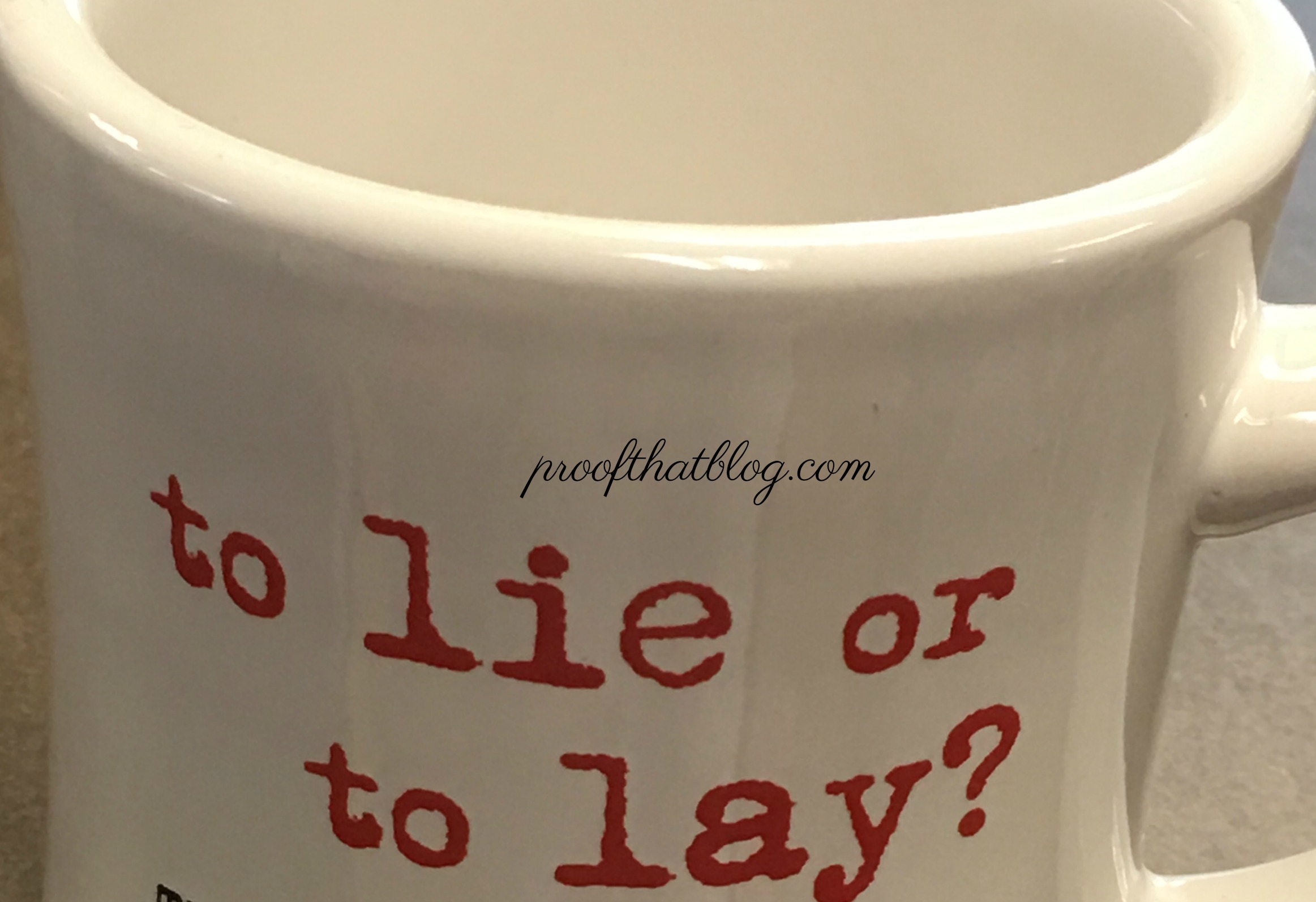
Lay (lay, laid, laying) means “to put” or “to place.” Because it’s a verb (action word) it requires an object to complete the meaning:
Lie (lie, lay, lain, lying) means “to recline, rest, or stay” or “to take a position of rest.” Unlike lay, which requires it, lie cannot take an object.
A way to remember the difference is that if you can replace the questionable lie or lay with place (or the correct version of it), then you need to use the correct version of lay. If it doesn’t, use the correct version of lie.
Another reminder hint might be if you are going to plAce something, then you are going to lAy it, but if you are going to rEst, you are going to liE.
My cousin sent this one to me. Seems to me that if “intelligence” is part of the name of your event, you would figure out how to spell it correctly. This is particularly important if you are spending the money for such a big banner.

 Follow