We found this error on a drink menu at a restaurant we recently visited. Perhaps if they’re going to abbreviate “glass” to be “gls,” they should abbreviate “pitcher” to be”pit.” That would at least fix this error.
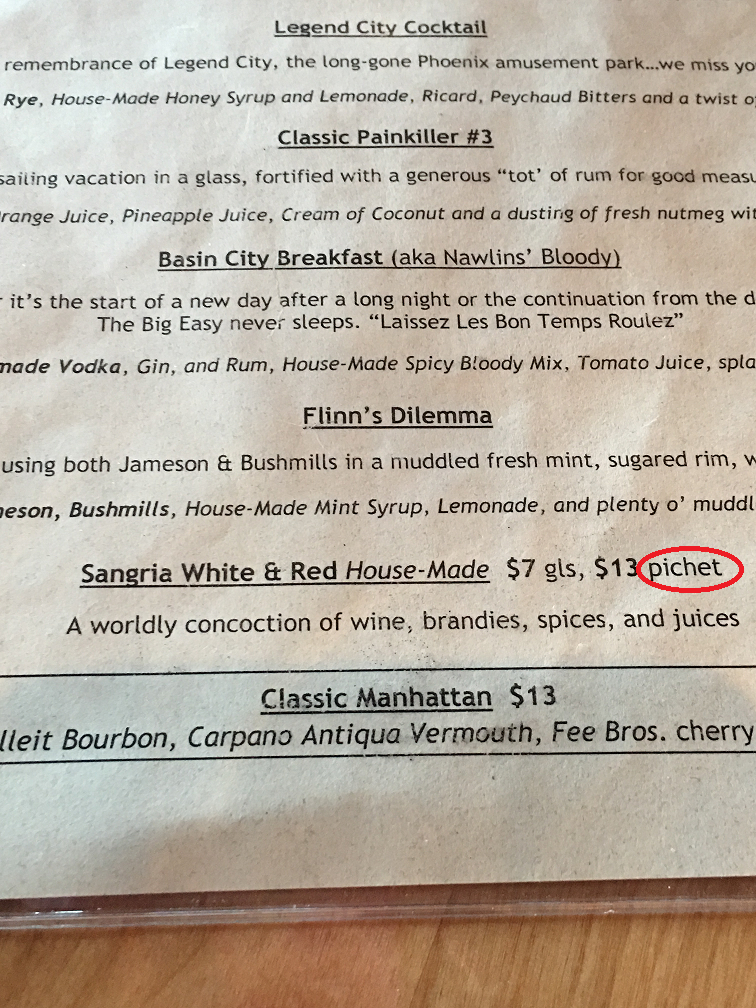

We found this error on a drink menu at a restaurant we recently visited. Perhaps if they’re going to abbreviate “glass” to be “gls,” they should abbreviate “pitcher” to be”pit.” That would at least fix this error.
 The Oxford comma is subject to debate. It is the comma before the word “and” in a series. For example, “bread, eggs, and milk.” The comma between “eggs”and “and” is called the Oxford or serial comma. It separates all of the parts of a list.
Some style guides tell you to use it and some tell you not to. The Gregg Reference Manual calls for the Oxford comma (¶ 162a).
The thing I always remember that encouraged me to use the Oxford comma was an example of a will that left property to John, Joe and Sarah. If you are literal (as most lawyers are), you could say that the property was left half to John and half to Joe and Sarah to share. If you add the Oxford comma between “Joe” and “and,” there is no question that the property is to be divided into three parts—one for John, one for Joe, and one for Sarah.
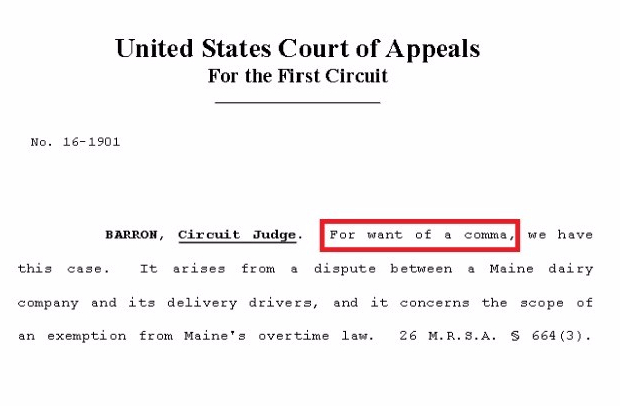
In my opinion, it is one small piece of punctuation that can make a huge difference in the meaning and intent of what you are writing. In fact, as most of you may have heard, just last week, an appellate court ruled in a Maine labor dispute based on the Oxford comma. The case was about dairy drivers who argued that they were entitled to overtime pay for certain tasks. The company said they were not entitled to that overtime. The appeals court ruled that the guidelines on activities entitled the drivers to overtime pay because the guidelines were too ambiguous due to the lack of an Oxford comma.
Here is the law’s wording about activities NOT meriting overtime pay:
The canning, processing, preserving, freezing, drying, marketing, storing, packing for shipment or distribution of:
(1) Agricultural produce;
(2) Meat and fish products; and
(3) Perishable foods.
Based on this language, is packing for shipment its own activity or is it packing for the distribution of the three things on the list? If an Oxford comma had separated “packing for shipment” and “or,” the meaning would have been much more clear. According to court documents, the drivers arguing for overtime actually distribute perishable food, but they do not pack it. That argument helped win the case.
The circuit judge said that had the language used the serial comma to mark off the last of the activities in the list, “then the exemption would clearly encompass an activity that the drivers perform.” Since the serial comma was not there to mark off the last of the activities, the judge obeyed the labor laws which, when ambiguous, are designed to benefit laborers and the case was settled.
“For want of a comma, we have this case,” the judge wrote.
But even worse than that is the fact that there are guidelines on how Maine lawmakers are to draw up their documents that do NOT include Oxford commas, so they followed the guidelines they were given. At least they followed the guidelines last week. This week, that guideline may have changed.
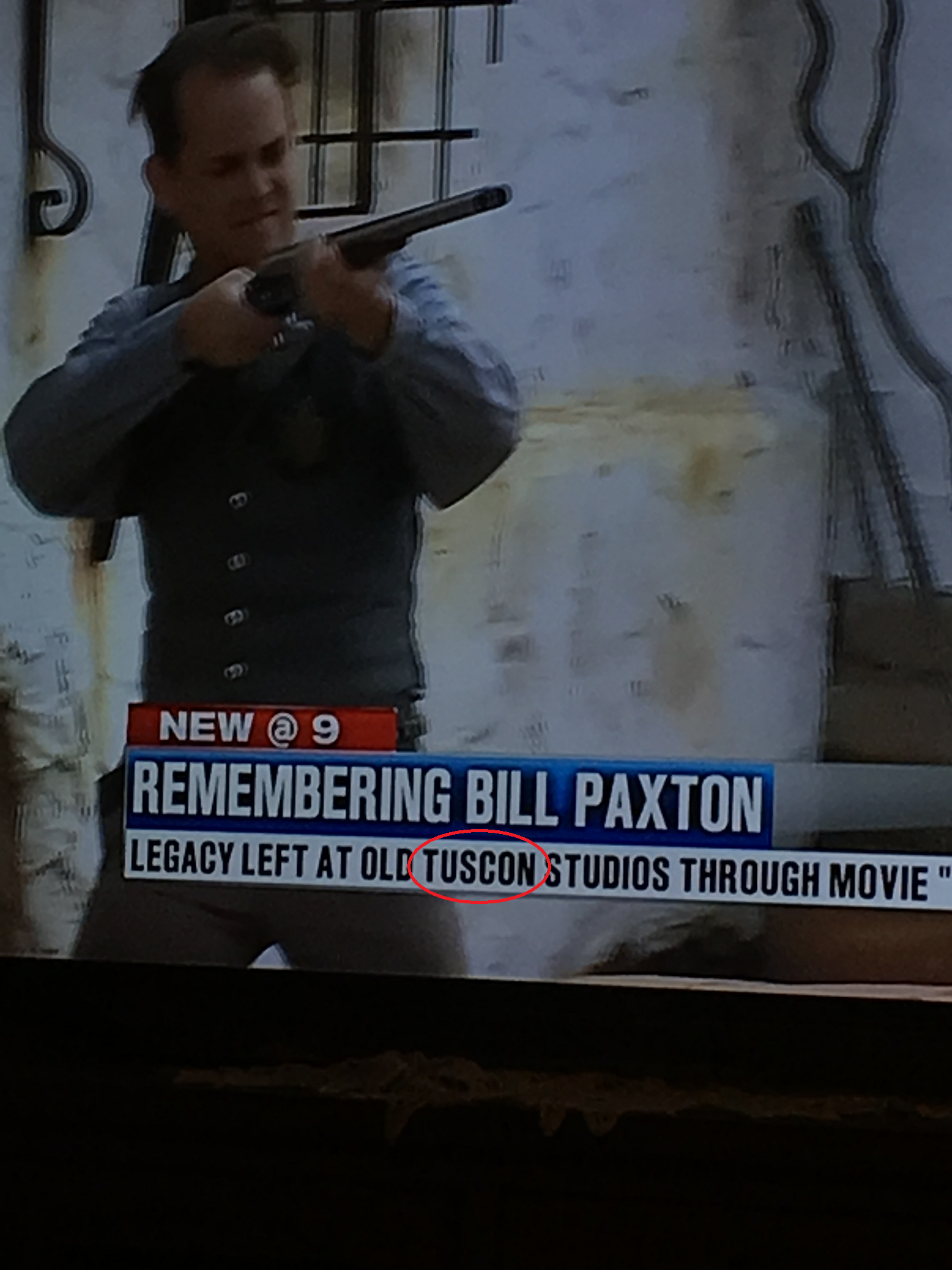
While I understand that some cities are difficult to pronounce and/or to spell, Tucson is the second largest populated city in Arizona, so our Phoenix news station should certainly know how to spell it. Pronounced “two saun,” if someone has problems remembering how to spell it, you could pronounce it “tuck sun” (but only in your head please) to help spell it right.
 Check out the updated article at ENCORE – The State of Capitalizing State
Murphy’s Law: Anything that can go wrong, will go wrong. I have lots of issues that tend to attract Murphy’s Law into my life. Thankfully a very attentive NALS member brought to my attention that the last Grammar Nuggets article on capitalizing the word “state” had a glaring error. The Murphy’s Law part of that is that that article was correcting a 2014 blog post, so we are correcting it again and I’m hoping the third time is the charm. I apologize for getting the information wrong. The reference in the The State of Capitalizing “State” post to The Gregg Reference Manual should actually have been a reference to The Bluebook. This clerical error made a confusing topic even MORE confusing. Here is the correct information:
According to the Gregg Reference Manual ¶ 335:
According to The Bluebook, capitalize the word “state”:
Obviously, The Bluebook is not a grammar guide—it is a style guide for legal citation. The only grammar guide that seems to disagree with part of the Gregg Reference Manual is the Chicago Manual of Style, which says “where the government rather than the place is meant, the words state, city, and the like are usually capitalized.”
I have made and will continue to make mistakes and I will continue to learn right along with you. While I hate making errors and hate even more when others catch them, I am always happy that they are brave enough to bring it to my attention and give me the opportunity to fix it. So as I said in the original article, capitalization of the word “state” is very confusing. But hopefully we’ve made it a little clearer—and more accurate—this time.
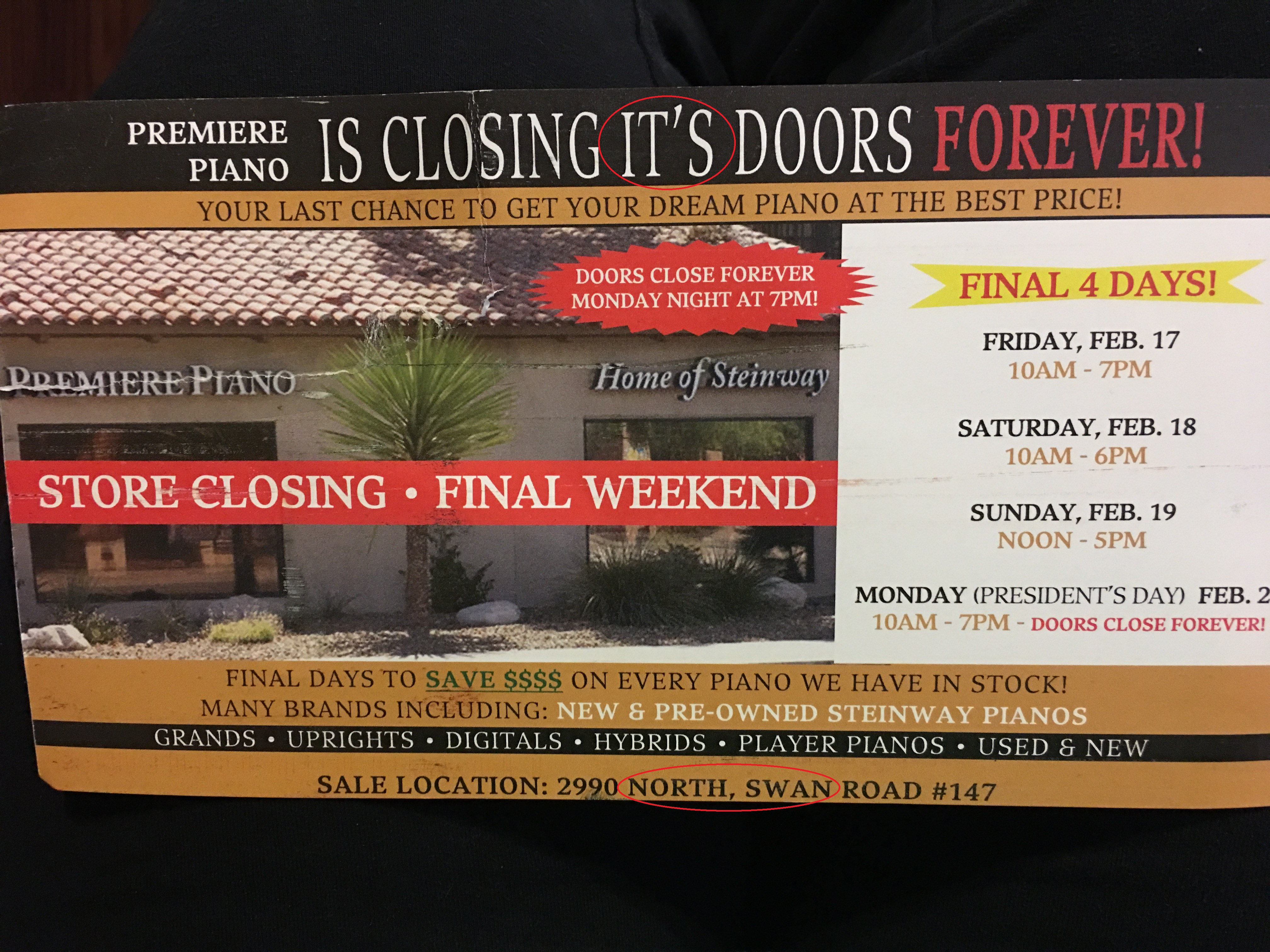
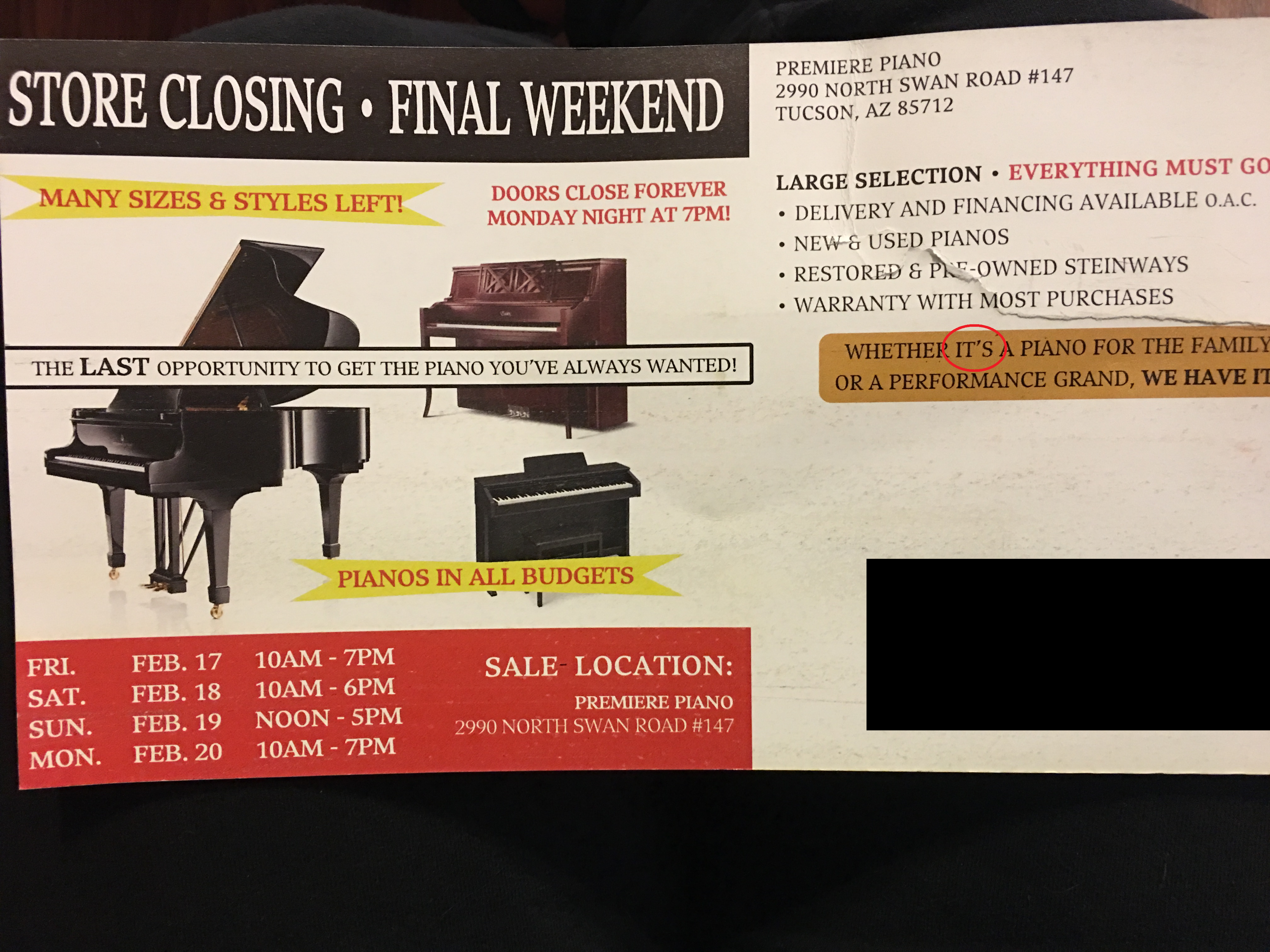
I pulled this out of my mailbox this weekend and noticed three errors before I even got back to my house. When the part of an advertisement intended to catch your eye has a glaring error, it really makes the company look bad. While they were consistent with their mistake, there was another anonymous placement of a comma.
I recently went to a painting party. I had a great time and ended up with a beautiful picture, which I’m still not convinced I actually painted. While on a break, I noticed their scrolling information about future classes on monitors throughout the facility. I saw these two errors. Even if your business is not grammar, you have people reading everything you have there and, perhaps, making judgments about your business based on that. A review of these slides should have caught the mistakes.


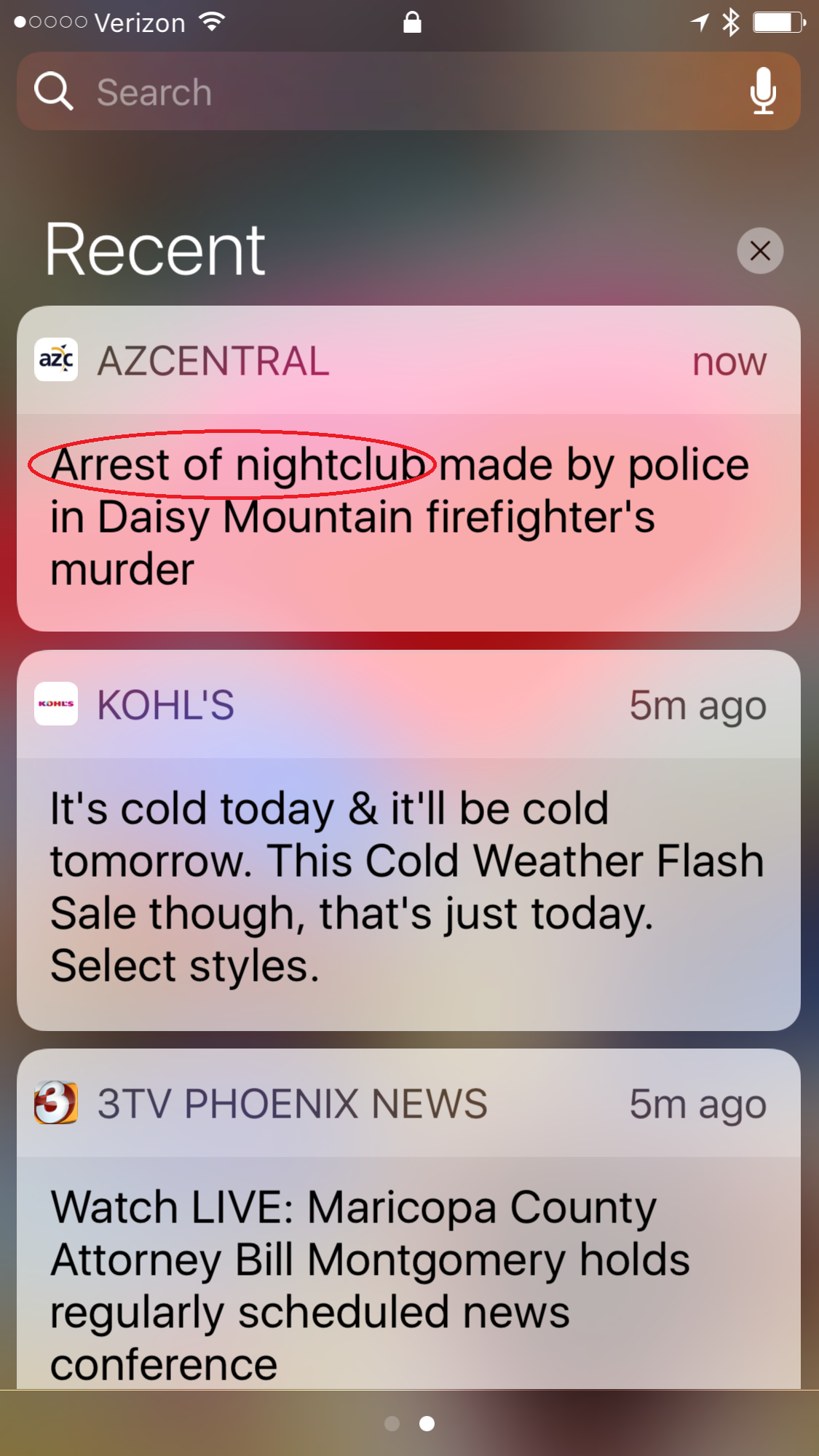
Once again in an effort to be the first to report, a local news station left out some words in this headline that are pretty important.
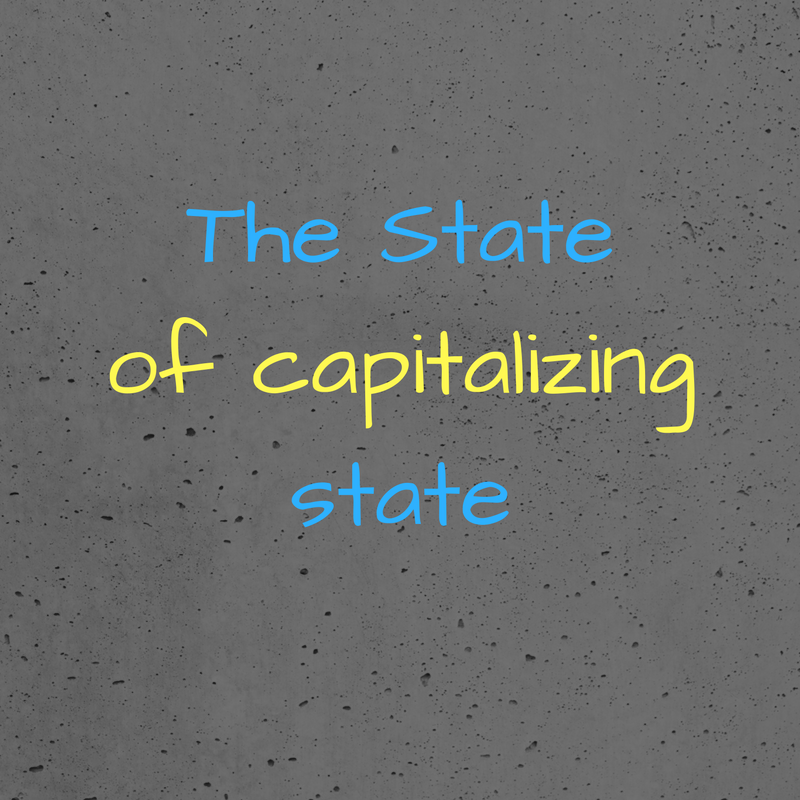
Check out the updated article at ENCORE – The State of Capitalizing State
I need to clarify something in a blog post published in 2014 on Capitalization in Legal Documents. The capitalization of the word “state” is obviously very confusing depending on your preferred resource.
According to the Gregg Reference Manual, “state” should be capitalized:
Most other sources I’ve found disagree with Gregg’s first example and say that “state” should not be capitalized when used as a proper noun but is capitalized when used in place of a particular state or referring to a specific governmental body:
According to another favorite resource of attorneys, the Chicago Manual of Style, “where the government rather than the place is meant, the words state, city, and the like are usually capitalized.”
Another resource simplifies it as when you are using “state” as a common noun, you would not capitalize it:
But do capitalize “state” if it is part of a proper name
All resources agree that “state” should be capitalized when it is a party to litigation.
The only comfort in all this confusion is that obviously everyone is confused. In fact, in many recent U.S. Supreme Court cases, “state” is capitalized in different instances, which may be a holdover from style from the 18th Century when many common nouns are capitalized.
Almost exactly a year ago, I posted a similar Grammar Giggle (Take a Peak At This) from a different local news station. It must be something about the season that brings this out in news stations. Again, peak is the top, peek is to look slyly at, and pique is resentment or to offend. I’m pretty sure they mean they are looking slyly at the Nutcracker (because they are behind the curtain).

 Follow