
I caught this on my local news station.


 It’s time for a review of recent blog posts just in case you’ve missed them. We call this Replay Thursday. Here are posts from Proof That proofreading blog and 60 Is The New 60 blog during the past week.
 Since this topic is the most popular on this blog and since it took me three tries to get it right, I wanted to redo the information in one post to make it easier for people to find and to give others a refresh on this topic. So when do you capitalize “state”?
According to the Gregg Reference Manual ¶ 335:
According to The Bluebook, capitalize the word “state”:
Obviously, The Bluebook is not a grammar guide—it is a style guide for legal citation.
Most other sources I’ve found disagree with Bluebook’s first example and say that “state” should not be capitalized when used as a proper noun but is capitalized when used in place of a particular state or referring to a specific governmental body:
According to another favorite resource of attorneys, the Chicago Manual of Style, “where the government rather than the place is meant, the words state, city, and the like are usually capitalized.”
Another resource simplifies it as when you are using “state” as a common noun, you would not capitalize it:
But do capitalize “state” if it is part of a proper name
All resources agree that “state” should be capitalized when it is a party to litigation.
The only comfort in all this confusion is that obviously everyone is confused. In fact, in many recent U.S. Supreme Court cases, “state” is capitalized in different instances, which may be a holdover from style from the 18th Century when many common nouns are capitalized.
 It’s time for “Confusing Words of the Week” where I take a set of two or three words that get confused and give you definitions and try to give you a memory trick to help you remember when to use which word. If you have words that confuse you, use the Ask PTB tab on the website or send an email to proofthatblog@gmail.com and they may appear here soon!
This week’s words are:
Memory tips:
As an extra, someone posted this sign on my Facebook page, and since it fit perfectly to demonstrate the issues with misspelling annually, I’m adding it here:

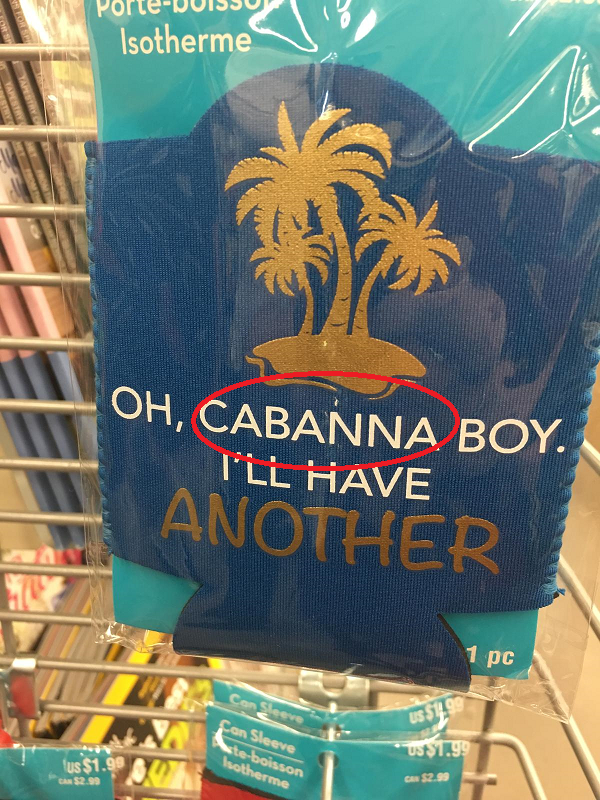
I found this on a rack near checkout at a craft store recently. I will admit I did look it up to make sure it was incorrect, but, alas, it is. Cabana only has one “n” in it.
While licence is not exactly INcorrect in that it is correct in, for example, Britain, Canada, and South Africa, this truck was in Mesa, Arizona, part of the United States, where license is correct.

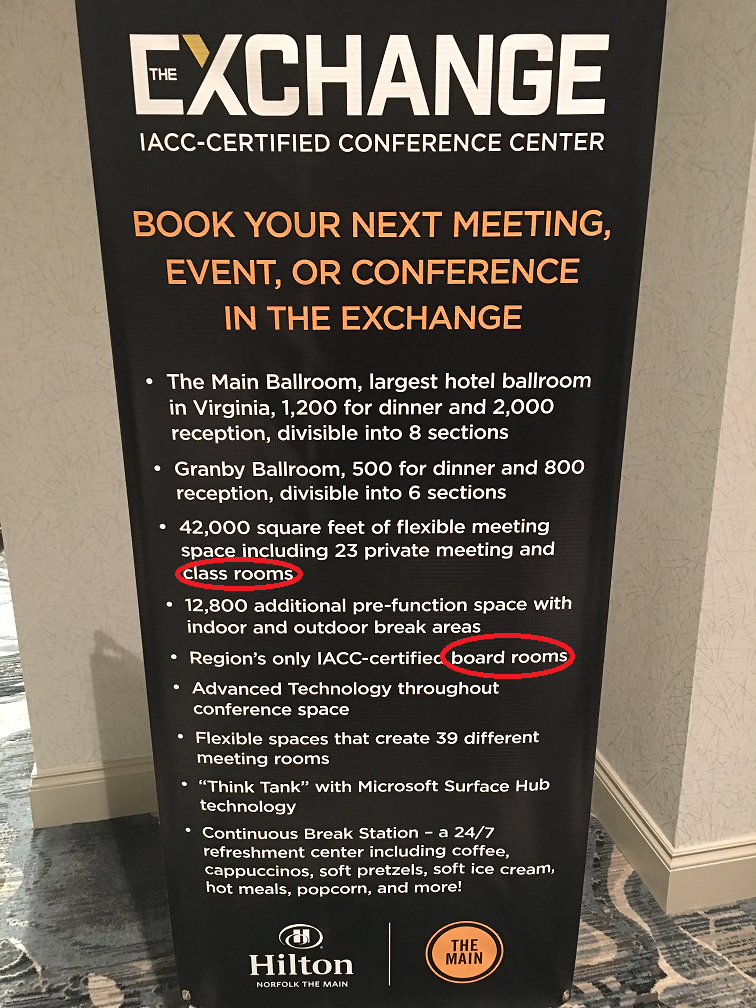
I saw this in a hotel recently. While “meeting rooms” is two words, “classrooms” and “boardrooms” are not.
It’s time for a review of recent blog posts just in case you’ve missed them. We call this Replay Thursday. Here are posts from Proof That proofreading blog and 60 Is The New 60 blog during the past week.
https://proofthatblog.com/2018/04/20/grammar-giggle-demons/
https://proofthatblog.com/2018/04/23/grammar-giggle-mental-heal-professional/
https://proofthatblog.com/2018/04/24/confusing-words-of-the-week-25/
https://proofthatblog.com/2018/04/25/how-do-you-define-proofread/
 n a fun twist on defining “proofread,” I decided to use each letter to come up with what proofreading means to me.
Providing the best product possible is the goal of proofreading.
Reading, and reading again, to make sure your document says what you think it says and says it correctly.
Outline defined terms in a second screen so you capitalize those throughout your document as defined and so you only define it once.
Organize what you need. If you’re reviewing a hard copy, have a red pen, good lighting, and a closed door if possible. If you’re reviewing online, you need good lighting, redlining on (easiest with no markup showing so you can see how it really looks), and a closed door if possible.
Formatting the document so that it looks good, margins are the same throughout, spacing is good, font is the same, no widow or orphan lines straggling on any page, and if necessary, it meets the court rules for formatting.
Redline your suggested edits so the author can see what you are suggesting be changed so you are not changing the entire meaning of the language.
Everything should be reviewed. Proofread your emails, letters, documents, and anything else that you are involved in and that reflects you.
Allow time to read the entire document through and to make any edits that are necessary.
Delete commas. Most people use far too many commas, but you have to understand the use of commas before you just start deleting them.
It’s time for “Confusing Words of the Week” where I take a set of two or three words that get confused and give you definitions and try to give you a memory trick to help you remember when to use which word. If you have words that confuse you, use the Ask PTB tab on the website or send an email to proofthatblog@gmail.com and they may appear here soon!
This week’s words are:
Memory tips:
 Follow