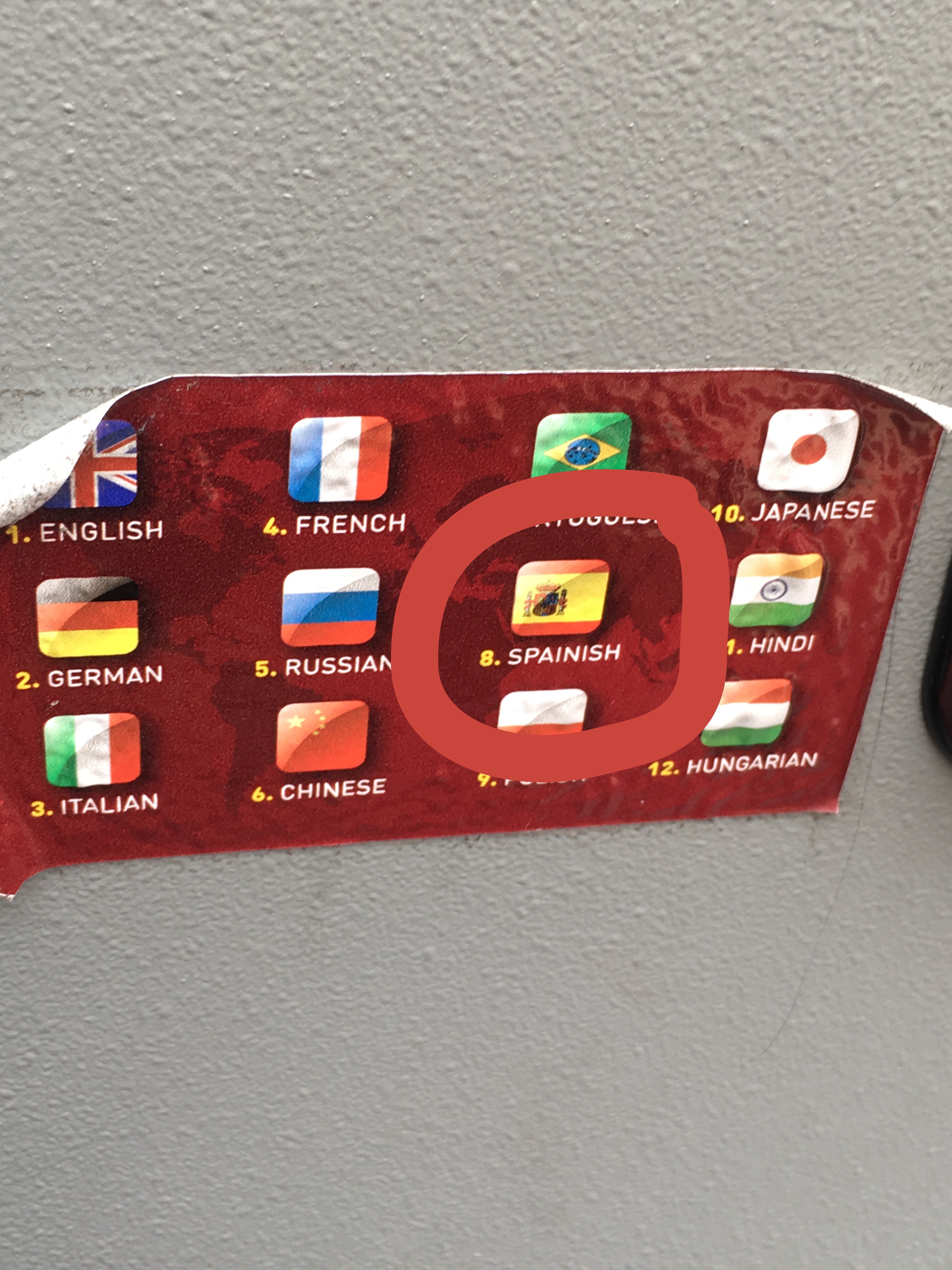
A friend sent this to me. Apparently, this company is not a master of spelling! It is pretty important that businesses at least spell things correctly.
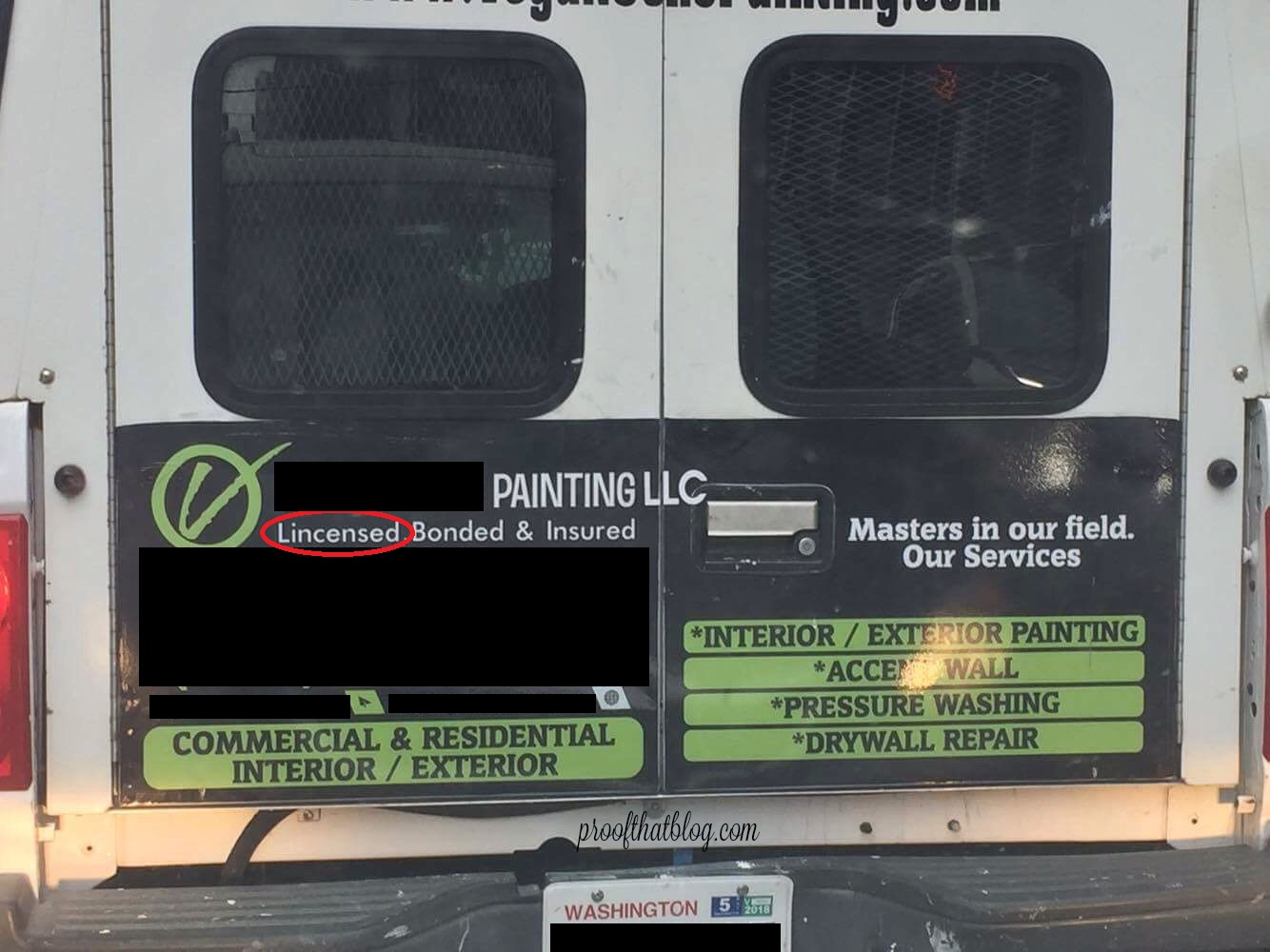

A friend sent this to me. Apparently, this company is not a master of spelling! It is pretty important that businesses at least spell things correctly.
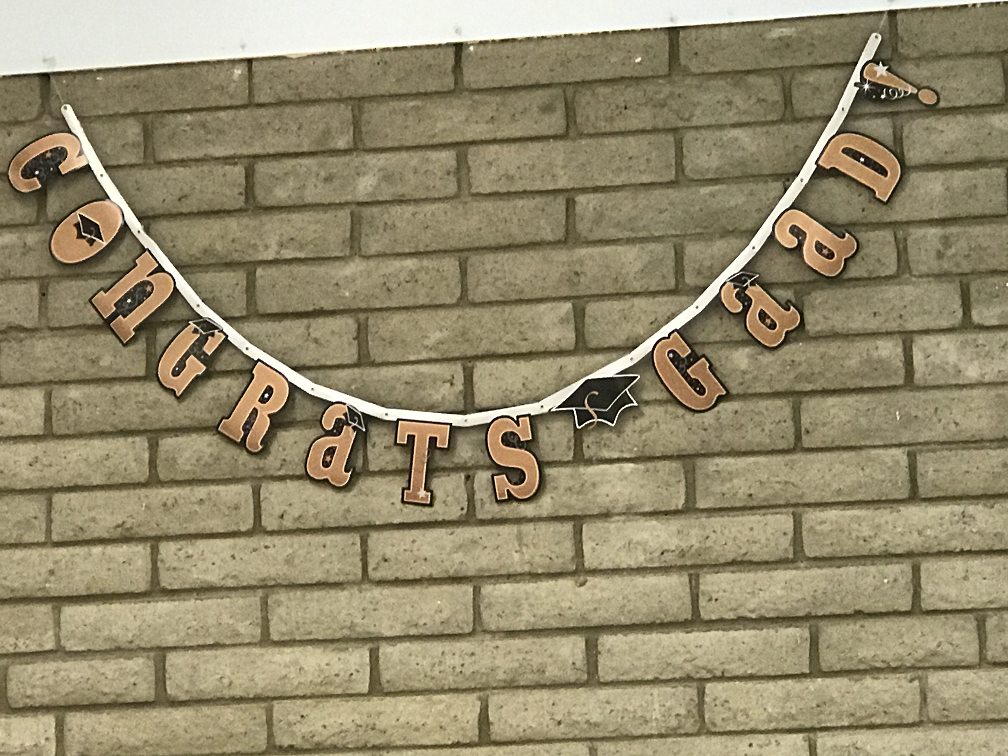
A friend sent this to me from her cousin’s graduation party. Apparently, they have had this sign since their first child graduated. It is their family funny and now it is a Grammar Giggle.
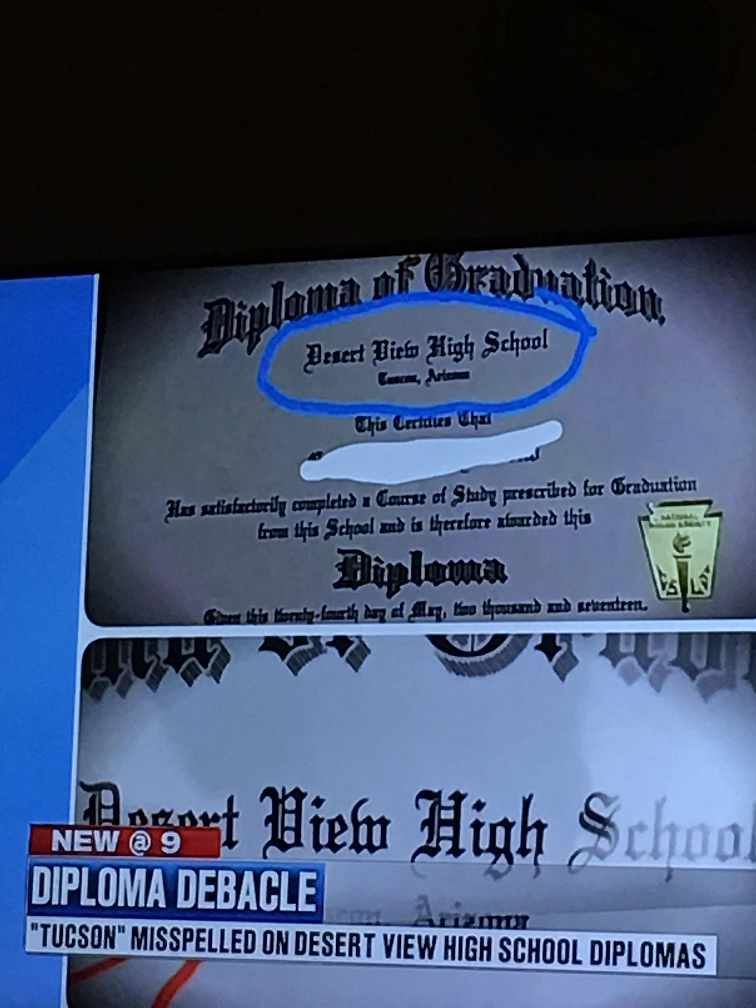
This was on my local news station. Apparently, another Arizona city high school had a slight problem with their diplomas–they all spelled the name of the city wrong. It should be “Tucson” but is spelled “Tuscon.” I apologize for the quality of the picture so you can’t really see it well. The banners on news programs sometimes drive me crazy because they always seem to cover something up.
 Here are some words that seem to have a propensity for being used incorrectly–particularly in the legal setting. Hopefully, this list will help you be that person who does know how to use them correctly.
There are so many other words that are easily confused. Do you have something that you or someone in your office constantly uses incorrectly? Let me know and we’ll include it in a future blog post with definitions and examples so they can start to get it right.
This is a common error that I see (and hear) a lot. Towards is used in British English, while in the U.S., we use toward. Toward means moving in the direction of or in relation to. So when I received this notification from an American company, it caught my attention. I have previously written a blog post about this topic at https://proofthatblog.com/2016/07/27/the-pesky-s/.

I have not shared Grammar Giggles from my European vacation because English is not their primary language so I was generous with any small errors I saw. However, on the Big Bus tour, I found this error. Since they are a large company with offices worldwide (including the US), I’m not so ready to cut them as much slack. So when I saw this one, the phone camera came out.
So by now, you may be wondering why I spend so much time talking about, writing about, and actually proofreading. Here are just a few of the reasons I think proofreading helps you:
Proofreading is a skill that can be learned and should be practiced. It is something that may well change your life (or perhaps only if you’re a nerd like me). So keep learning, keep practicing, and keep honing that skill.
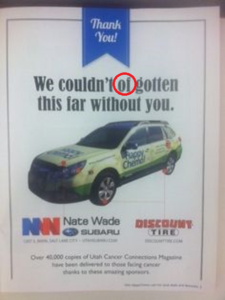
This I found on Twitter. The correct phrase should be “couldn’t have gotten.” I think the error happens because when you are actually saying the phrase out loud, it sounds like “couldn’t uv gotten” so people assume it is “of” instead of “have.” That is incorrect.
 So is it “attorney’s fees” or “attorneys’ fees”? I see it both ways in all kinds of documents. According to Bryan Garner, it seems that “attorney’s fees” is used most frequently, but that “attorneys’ fees” is acceptable in cases where more than one attorney is charging fees for services. Some people use “attorney fees” to avoid making decision altogether.
Other sources I found say:
No wonder people are confused. While it isn’t really a big deal, your firm should decide which form they want to use and then everyone should use that form. My biggest fear is always that different briefs from the same firm will have it different ways. Remember my mantra–consistency is good.
Here is my take: If there is ONLY one attorney charging fees, I think “attorney’s fees” is correct. They are the fees of that attorney. However, if there are multiple attorneys charging fees even in one firm, it should be “attorneys’ fees.” They are fees charged by multiple attorneys.
Do you agree?
 Follow