

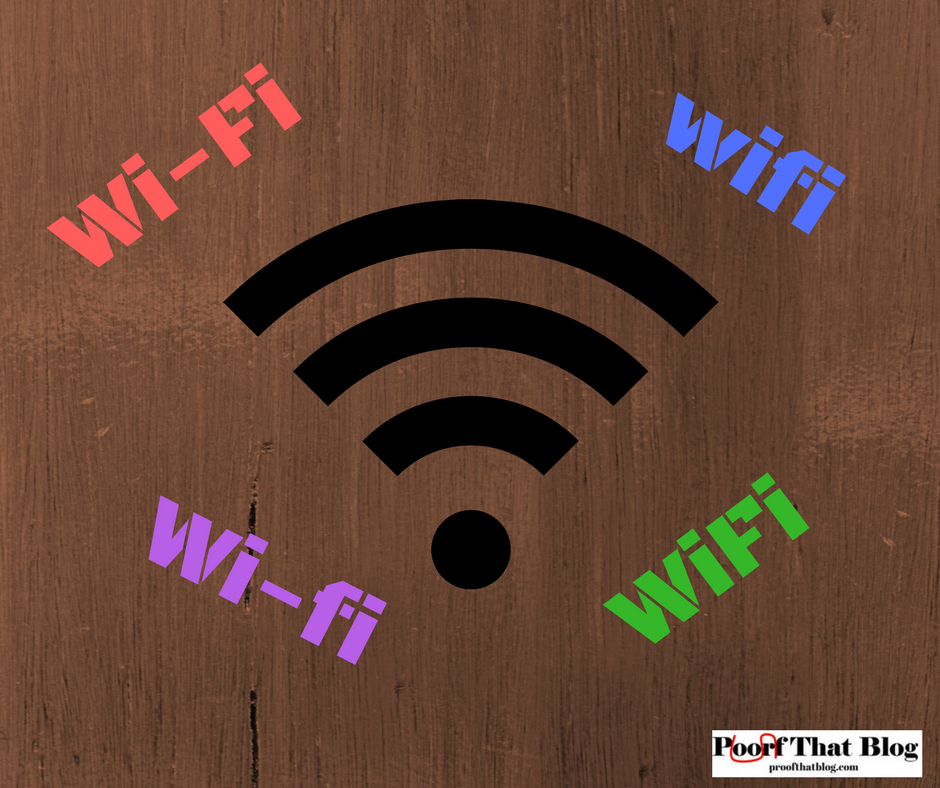
Wi-Fi, Wifi, Wi-fi, WiFi–Which One Is Right? proofthatblog.com
I was recently a passenger on a road trip from Albuquerque to Phoenix. On that route, there are tons of billboards, some very professional and some not so much. One thing I noticed as I was checking for errors was the many ways that hotels spell the word indicating you will be able to use your phone, tablet, e-reader, watch, etc. to access the internet (usually for free).
I decided to do a little bit of research to find out what the appropriate spelling should be. That sounds easy, doesn’t it? Well, it isn’t.
- According to Merriam-Webster’s online dictionary, “Wi-fi” is used to certify the interoperability of wireless computer networking devices. (Spelling #1)
- The AP Stylebook’s dictionary of choice–Webster’s New World–defines “Wi-Fi” as an abbreviation for wireless fidelity, meaning you can access or connect to a network using radio waves, without needing to use wires. (Spelling #2) Webster’s also indicates that it is also written “WiFi.” (Spelling #3)
- Tripsavvy.com (a true expert on spelling and definitions) defines “wifi” as “the wireless network you connect to that allows you to access the internet.” (Spelling #4)
- The American Heritage Dictionary indicates that “Wi-Fi” is a trademark for the certification of products that meet certain standards for transmitting data over wireless networks.
- The Chicago Manual of Style indicates that “Wi-Fi” is a trademark.
- “Wi-Fi” is the registered trademark of the Wi-Fi Alliance, who “brings us Wi-Fi.” Their website indicates they coined the term “Wi-Fi” and they certify Wi-Fi products.
I found several more instances of the “Wi-Fi” spelling. In addition, it seems that Wi-Fi Alliance is more the expert and that’s the way that organization spells it–so “Wi-Fi” seems the most correct.
 Follow
 It’s time for “Confusing Words of the Week” where I take a set of two or three words that get confused and give you definitions and try to give you a memory trick to help you remember when to use which word. If you have words that confuse you, use the Ask PTB tab on the website or send an email to
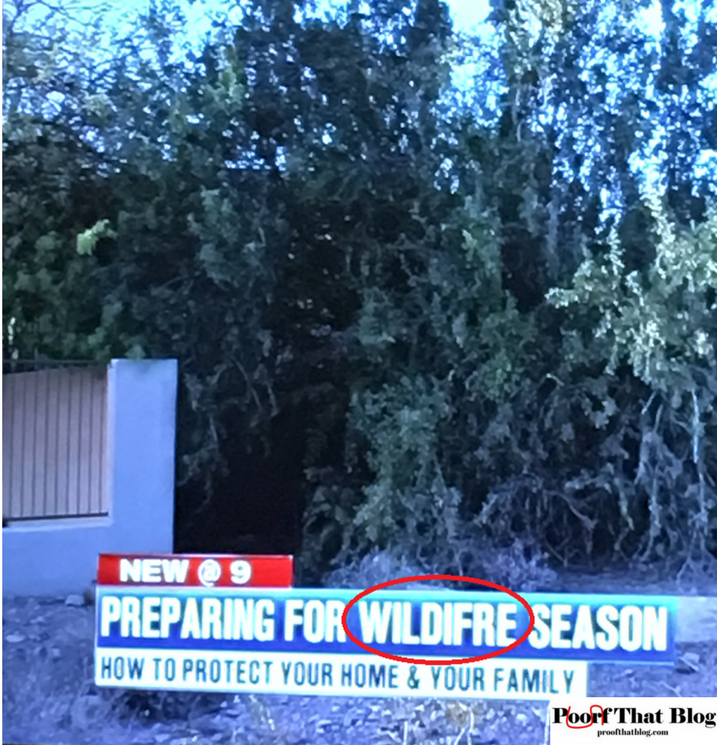
 It’s time for a review of recent blog posts just in case you’ve missed them. We call this Replay Thursday. Here are posts from Proof That proofreading blog and 60 Is The New 60 blog during the past week.

 I found this article and thought it was interesting. Incorrect use of apostrophes is probably my biggest pet peeve. It isn’t really hard. If you need to show possession or show that letters are missing, use an apostrophe. Otherwise, for the most part, do not use an apostrophe. There are, of course, exceptions, but you need to learn the difference because I’m pretty sure that you don’t want your attorney’s work to be the topic of a FindLaw article.